Lowell Bergman Quotes
There has always been tension between reporters and the administration, particularly when it comes to war in the modern era. You can go to Kennedy or Johnson and see that they weren't happy with David Halberstam or Morley Safer.
Bergman, Lowell. "Frontline: News War." The Washington Post, 13 Feb. 2007.


_0_thumbnail_47x47.jpg)
Ironically politicians need the journalists to communicate their message adn get public exposure and the Journalists need the politicians to provide subject matter and to serve as sources. Each uses the other which produces resentment.


The story had been placed by Republican dirty tricksters throughout the press. Reston, then the editor of the New York Times, was totally uninterested in whether or not the story was true. He, in contrast to some other NYT staff was not a JFK enthusiast in general. but saw such material as not news and certainly not “fit to print.”—the newspaper’s oldest journalistic standard He removed the reporter from the assignment but in such a climate, it is easy to see in retrospect why the JFK sex scandals were not covered by the press.


For a similar sentiment, see Eric Cantona {276121}
In modern times, there have been many incidents of members of the press not supporting the current war effort. Sometimes, it is the greed to get a story, and other times, it is to advocate an alternate strategy. Most often it is a belief that in democracy, only a knowledgeable public can govern the government. The administration or general cannot be relied upon to provide accurate information. Many think The Vietnam War started this problem, but it has been ongoing ever since the Revolution. In the War of 1812, with many Americans dying fighting, other Americans were critiquing the war infuriating the military and the President. Similarly, in all other wars including the Civil War. The relationship between Grant and the Press was as vitriolic as that of the Vietnam War. The war where there was the least conflict between the military and the press was WWII where press were given total access to the front lines without the controls that developed later in the Iraq War.


The American Press was actually split and there were Tory and revolutionary editors. However, like almost all politicians of all times in time of crisis, he saw the press as inaccurate and corrupt and an unfortunate “appendage of public liberty.”

A German Lieutenant in occupied Alsace-Lorraine told new recruits that if a local insulted them and they stabbed him (with a sword) they would not only not be punished but would receive a bonus of 10 marks. The newspapers carried the story the world over and huge public pressure was brought upon the government and the army to punish the officer. The very concept of the press and the public being a factor was totally offensive to the General and many other right-wingers who saw that as the problem, not the Lieutenant’s behavior or the policy of the army.
This is perhaps a situation that has existed in every country ever where the press was not controlled.


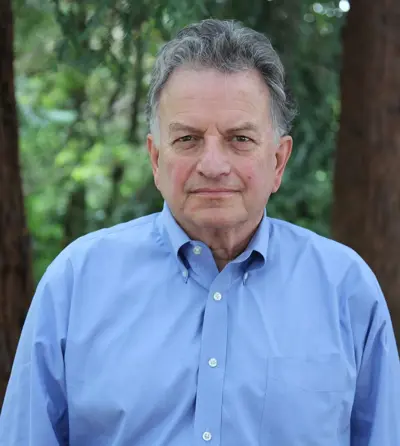
Lowell Bergman is the Emeritus Reva and David Logan Distinguished Chair in Investigative Reporting at the Graduate School of Journalism at UC Berkeley and founder of the Investigative Reporting Program, where he taught lecture classes and then seminars dedicated to investigative reporting for 28 years. He was also a producer/correspondent for the PBS documentary series Frontline. Bergman’s career spans nearly five decades, most notably as a producer, a reporter and then the director of investigative reporting at ABC News and as a producer for CBS's 60 Minutes leaving in 1998 as the senior producer of investigations for CBS News. In 2019, Bergman retired after a 50-year career in journalism.
