ERICH VON FALKENHAYN
(Erich Georg Sebastian Anton von Falkenhayn)
The issue of whether the military has any rights per se in a democracy or is an institution established and controlled by the people is one that separates many countries today. In one philosophy—held by America and most industrial democracies—the military is completely subservient to and under the control of the people and their government. The other view held by many societies controlled by the military is that the military is a subset of the people with specific rights granted to it. In some countries the military can name representatives, can veto legislation and are considered a faction just like political parties. See China, Turkey, Argentina, and Indonesia for examples of the latter view.
A German Lieutenant in occupied Alsace-Lorraine told new recruits that if a local insulted them and they stabbed him (with a sword) they would not only not be punished but would receive a bonus of 10 marks. The newspapers carried the story the world over and huge public pressure was brought upon the government and the army to punish the officer. The very concept of the press and the public being a factor was totally offensive to the General and many other right-wingers who saw that as the problem, not the Lieutenant’s behavior or the policy of the army.
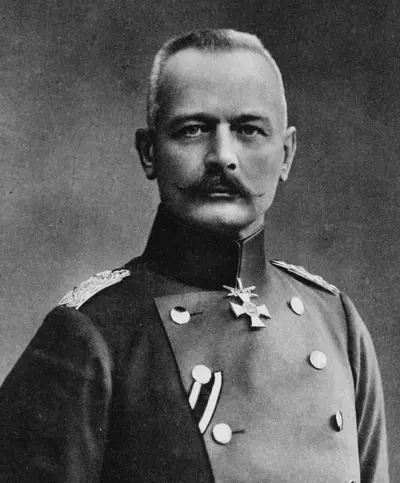
General Erich Georg Sebastian Anton von Falkenhayn was the second Chief of the German General Staff of the First World War from September 1914 until 29 August 1916. He was removed on 29 August 1916 after the failure at the Battle of Verdun, the opening of the Battle of the Somme, the Brusilov Offensive and the entry of Romania into the war on the Allied side undid his strategy to end the war before 1917. He was later given important field commands in Romania and Syria. His reputation as a war leader was attacked in Germany during and after the war, especially by the faction which supported Paul von Hindenburg. Falkenhayn held that Germany could not win the war by a decisive battle but would have to reach a compromise peace; his enemies said he lacked the resolve necessary to win a decisive victory. Falkenhayn's relations with the Chancellor Theobald von Bethmann-Hollweg were troubled and undercut Falkenhayn's plans.
