Esfandiar Rahim Mashaei Quotes
There are actually not too many people in the prisons. There were hundreds and thousands of people who came on the streets voicing their opinions. If we had to capture all of them, the prisons would not even have space. The few that are in prison are the ones who vandalized and created violence and took away the safety of the people.
Esfandiar Rahim Mashaei, Quoted in Laura Secor, AN INTERVIEW WITH AHMADINEJAD’S CHIEF OF STAFF, The New Yorker, May 5, 2010
Sourced by: Eigen's Political and Historical Quotations


Two protesters were killed. The demonstration so affected the government that they pressured the Belfast local authorities to announce substantial increases in relief. The economy and the employment picture got no better that year.

at the fall of the Soviet Union

The South was segregated at the time and Negroes were required by law to sit in the back of the busses. There were no seats left in the back and Ms. Parks sat in the “white” section causing her to be arrested. That act ignited public opinion, led to Black boycotts of segregated busses, and morphed into the civil rights movement.


He was trying to justify the arrest, torture and mistreatment of 15 trade union activists in Zimbabwe, and in the process showed himself for the brutal dictator that he had become.


This is a classic Egyptian political technique. Egyptian political leaders espouse democratic values and endorse human rights, but control and regulate the actual exercise of rights so that “unacceptable” groups or people can never really assemble or protest. They make an application to demonstrate and find themselves arrested or “detained” so the Egyptians can say that no one is refused the right to assemble. Their permit was not denied.

This quotation illustrates a new tactic adopted by the Immigration Reform Movement (FIRM) in 2014. They trained very young children (with their parents permission) in how to handle themselves in a protest when the police arrive and tell them to disperse. By having children as young as 11 protesting shutting down streets in Washington so that they would get arrested. Coping with young children committing civil disobedience was something the police were not used to and involved much more complex procedures than arresting adult demonstrators. In addition, the sight of such young children being arrested for civil disobedience attracted much attention from the media, thereby publicizing the immigration issue. Elias and his mother were both U. S. citizens. In 2006 Elias’s father, an undocumented Mexican immigrant, returned to Mexico to apply for a visa to visit his wife and son. He was denied, so he crossed the border without papers. He was deported from the family home in 2008 and Elias and his mother had not seen him since then. Under the then existing immigration rules and laws, even a person whose spouse and children were U. S. citizens residing in America, could not even get a visa to visit them much less get citizenship. The Obama administration’s “family friendly” policies collapsed with immigration where the policies broke up otherwise intact families.


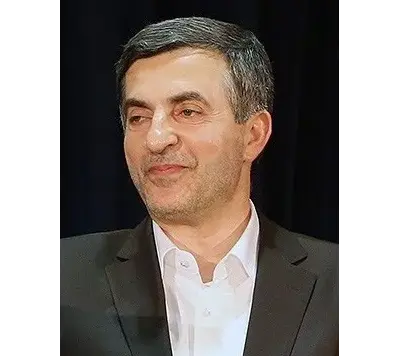
Esfandiar Rahim Mashaei is an Iranian conservative politician and former intelligence officer. As a senior Cabinet member in the administration of President Mahmoud Ahmadinejad, he served as Chief of Staff from 2009 to 2013, and as the First Vice President of Iran for one week in 2009 until his resignation was ordered by Supreme Leader Ayatollah Ali Khamenei.
