Quentin Tarantino Quotes
Then they'd [Nazi] make movies against England, you know, in the same way, to help, you know, feather their nest for what they - their aggressions.
Tarantino, Quentin. Interview by Terry Gross. Fresh Air, NPR, 28 Dec. 2009.


Although Churchill, FDR, and a few other world leaders also recognized this reality, most people, even in America and Europe were not yet knowledgeable about the danger of Hitler and Nazi Germany. What is fascinating is that a theoretical scientists—one whose work had little to do with reality could be that perspicacious to identify major political trends. But Einstein was not only one of the world’s great scientific thinkers but he was a very sophisticated political and philosophical thinker.


In 1938 Germany had rearmed and resumed its aggressive designs of expansion. Hitler wanted the Sudetenland part of Czechoslovakia and threatened an invasion of that country. England had France had a treaty obligation to militarily support Czechoslovakia if it were attacked. British Prime minister Neville Chamberlain and the French were desperately trying to avoid war, not realizing that with Hitler, that position was the very thing that would bring on war. So they agreed to Hitler’s demand and allowed Czechoslovakia to be partitioned and the Sudetenland was annexed to Germany. This craven appeasement emboldened Hitler who then decided to conquer all of Europe as he had no serious opposition from France and England—the two powers that might have stopped him. (At the time, the French had a larger army than the Germans.)


War between England and Germany had just commenced. The last sentence refers to the fact that Hitler had recently signed a peace pact with Stalin to everyone’s surprise as Hitler told the German people over and over that Russia was Germany’s biggest enemy. The pact was only a ruse on Hitler’s part to delay Russia’s entry into the war. Hitler broke the treaty and invaded Russia a little later.

The Nazis persecuted the Freemasons along with the Jews and Gypsies. The rationale was that the Freemasons were traitors and enemies of Germany. There is no record of any organized opposition to the Nazis by German Freemasons. However, it is likely that the older aristocratic German families which tended to join Masonic lodges, were not great enthusiasts about Hitler. For Nazi Germany, lack of enthusiastic support was treason. Kaltenbrunner was one of the major war criminals declared guilty at the Nuremberg Trials and hanged.

In retrospect Mises was absolutely right. However it was most amazing how the right wing—even in England and America—were admirers of Hitler and the Nazis and opposed any attempt to curb Nazi fascism. In England the many of the aristocracy including the King had Nazi Sympathies (He abdicated.) For American examples, see {593191} and {623572}.


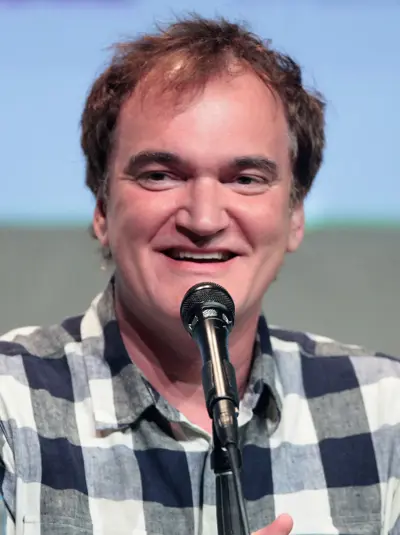
Quentin Jerome Tarantino is an American film director, screenwriter, producer, and actor. His films are characterized by nonlinear storylines, dark humor, aestheticization of violence, extended scenes of dialogue, ensemble casts, references to popular culture and a wide variety of other films, eclectic soundtracks primarily containing songs and score pieces from the 1960s to the 1980s, alternate history, and features of neo-noir film.
