William O. Douglas Quotes
The use of violence as an instrument of persuasion is therefore inviting and seems to the discontented to be the only effective protest
William O. Douglas, 1898-1980, U.S. Supreme Court Justice, Chairman, Security & Exchange Commission, Points of Rebellion, 1969
Sourced by: Eigen's Political and Historical Quotations


He controlled a Shiite political party with its own armed militia.


He had a lifelong hatred toward the Internal Revenue Service. Finally he crashed his single engine airplane into the IRS offices, killing an IRS agent and committing suicide in a different version of suicide bombing.


This quotation illustrates degree of hatred that the French had for the English for the hundreds of years of their European superpower rivalry.


He grossly underestimated the intensity of the American patriotic feeling and the fighting ability of the Colonists. He Commanded the Royal Marines at the Battle of Bunker Hill where he was killed by a shot fired by ex-slave and Black Patriot, Peter Salem. Note the recommendation to destroy towns. At the time, that was considered improper in warfare between nations, yet it was not so clear in fighting a rebellion. However, this was against British policy and it was not a tactic employed in trying to suppress the American Revolution.


Lev Davidovich Bronstein

A privately produced anti-Muslim video was used by Muslim activists throughout the world to whip up violent protests of the United States, Many people were killed. The President was explaining to world leaders the Western view of the importance of protecting free speech, even that which is blasphemous or hateful. One problem of course is that the Islamic holy scripture, The Koran, requires that a blasphemer be put to death. The Jewish and Christian Old Testament proscribes the SAME punishment, and there have been American Christians who have called for a return to literal Mosaic Law. Also ultra-orthodox Jews in America and Israel. The difference of the West is that literal interpretation of the Bible has been given up and the various Biblical Death penalties (including disobedient children and adulterers) and much of the Muslim world has not. For most of the West, democracy has tempered literal religion. For the Islamic world, literal religion has inhibited and obstructed democracy.
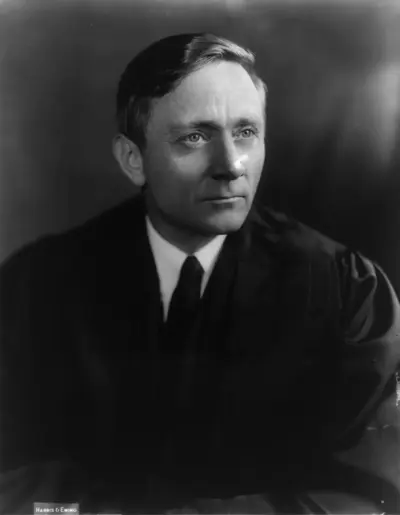
William Orville Douglas was an American jurist and politician who served as an associate justice of the Supreme Court of the United States. Nominated by President Franklin D. Roosevelt, Douglas was confirmed at the age of 40, one of the youngest justices appointed to the court. His term, lasting 36 years and 211 days (1939–75), is the longest in the history of the Supreme Court. In 1975, Time magazine called Douglas "the most doctrinaire and committed civil libertarian ever to sit on the court."
