Condoleezza Rice Quotes
The United States has been very clear that we did have to have some political basis to make clear that that cessation of hostilities was not going to countenance a return to the status quo
ante. This resolution does that. And now we're going to see who is for peace and who isn't.
Rice, Condoleezza. "Press Conference on UN Security Council Resolution 1701." 11 Aug. 2006, United Nations Headquarters, New York.


In this case, he was referring to the situation with the Barbary Pirates who had an incredible extortion racket going in the Mediterranean. If nations would pay them an annual sum each year, they would not attack and seize merchant ships of that country and sell the ships and goods while holding the sailors for ransom. Jefferson favored and authorized war—a naval attack which for many reasons the European nations had not done (they just paid the tribute). Then a peace treaty was finally signed—the first American Treaty.

Shortly after, he backed off the notion of having a bloodbath removing protesting students.


He was exactly right. Two decades later Germany had started WWII.

This is one of the fears of many Israelis—that a Palestinian state with a peace treaty—will just be an opportunity for the Arabs to gain strength and develop their capability to again try and destroy the Jewish state which they have tried to do ever few years until they are defeated and another truce is negotiated.


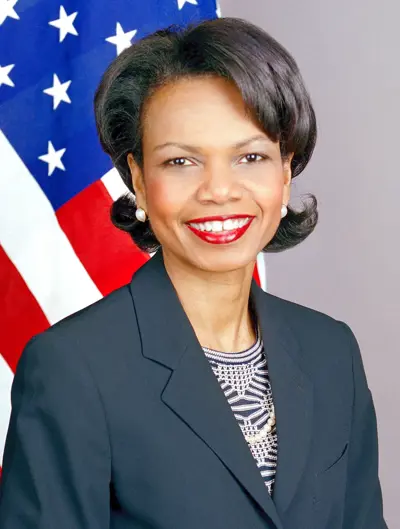
Condoleezza "Condi" Rice is an American diplomat, political scientist, civil servant, and professor who is the current director of the Hoover Institution at Stanford University. Rice served as the 66th United States Secretary of State from 2005 to 2009 and as the 20th United States National Security Advisor from 2001 to 2005. A member of the Republican Party, Rice was the first female African-American secretary of state and the first woman to serve as National Security Advisor. Until the election of Barack Obama as president in 2008, Rice and her predecessor, Colin Powell, were the highest-ranking African Americans in the history of the federal executive branch (by virtue of the secretary of state standing fourth in the presidential line of succession).
