Robert Bork Quotes
The Supreme Court is an ideal legislature for the intelligentsia.
Bork was the proponent of the theory that the Supreme Court constantly exceeded its authority and became a de facto legislature to make reforms the elite, intellectual elements of society desired as opposed to what the majority wanted.
Robert Bork, U. S. Solicitor General, Judge, U. S. Court of Appeals, Washington DC, Speech, C-SPAN American Perspectives, September 6, 2005
Sourced by: Eigen's Political and Historical Quotations


The New Deal liberal Democrats had complained that the Supreme Court was making national policy and law and not interpreting law. They tried to pack the Supreme Court by adding more justices who would be more sympathetic to the New Deal. (See {587549}.) At the beginning of the 21st century it was the conservative Republicans who were making the same claim that the Supreme Court was making law and not interpreting it. The pattern seems to be when the court votes for your side, they are interpreting the law. When they vote for the other side, they are activist—making law improperly.


Hatch was the chairman of the Senate Judiciary Committee at the time.

Jefferson’s fears were later reinforced by John Marshall in Marbury v. Madison {606468}


Originally it was published in Boston under the name “A Columbian Patriot.” She was worried about the jurisdiction of the Supreme Court extending throughout the country and yet the nation was very much smaller then than it is today. However, transport and communications have grown with the country.


Barstow the Democratic Governor who had no serious opposition in 1853 found himself challenged for reelection by Coles Bashford of the new Republican Party. The Board of Canvassers reported that Governor Barstow had won reelection but by less than 200 votes in the whole state. The Republicans charged that there had been fraud in some of the rural districts and petitioned the Wisconsin Supreme Court which ruled that nonexistent precincts had indeed voted for the Governor. The Barstow however refused to recognize the decisions of the court claiming that the court had no jurisdiction over the Board of Canvassers who were part of the executive branch. The Republicans held their own inauguration and two men claimed to be Governor. But the Governor claimed that the state constitution did not give the court any authority to deal with the crisis, He even called out the State Militia to maintain his office and intimidate the Supreme Court and keep the “other governor” from the state house. Nonetheless the court ruled that even the Governor had to obey the law and the Supreme Court would determine what the law was. Barstow finally “resigned.” See {587917} & {587914}.

One of the conundrums of our constitutional system is who has the last word as to what the Constitution means. Essentially it is the judicial branch headed by the Supreme Court. But there are those who believe that the current popular majority should have a say in what is or is not constitutional. If so the legislative branch should have the last word. Still others say that the President is the only person elected by ALL the people, so his opinion most reflects the will of the public. And then there are most who argue that the Constitutional system was created just to avoid the power of currently popular majorities, and the courts should decide based on the Constitution itself. So the statement has very little meaning except that Phillips thinks that the courts have too much power. Whoever gets to decide what is or is not Constitutional will be accused of being “over” the Constitution by those who don’t like the decisions. In our system, that is the courts.


TR had a Supreme Court where a conservative block was in the majority and declared a number of his key reforms as unconstitutional. The same thing happened to FDR as well. Since Supreme Court justices had lifetime tenure most presidents and congresses have to deal with a court that has the political makeup and political philosophy of previous administrations by which they were appointed. Reform and change presidents tend to see the Supreme Court as obstructionist.

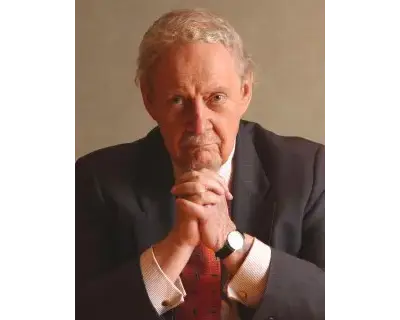
- Born: March 1, 1927
- Died: December 19, 2012
- Nationality: American
- Profession: Public Servant
Robert Heron Bork was an American judge, government official, and legal scholar who served as the Solicitor General of the United States from 1973 to 1977. A professor at Yale Law School by occupation, he later served as a judge on the influential U.S. Court of Appeals for the D.C. Circuit from 1982 to 1988. In 1987, President Ronald Reagan nominated Bork to the U.S. Supreme Court, but the U.S. Senate rejected his nomination.
