Patrick Leahy Quotes
The Supreme Court is our ultimate check and balance.
Patrick Leahy, U.S. Senator (Democrat, VT), Senate Judiciary Committee Hearings on the Supreme Court Nomination of Samuel Alioto, January 9, 2006
Sourced by: Eigen's Political and Historical Quotations

One of the conundrums of our constitutional system is who has the last word as to what the Constitution means. Essentially it is the judicial branch headed by the Supreme Court. But there are those who believe that the current popular majority should have a say in what is or is not constitutional. If so the legislative branch should have the last word. Still others say that the President is the only person elected by ALL the people, so his opinion most reflects the will of the public. And then there are most who argue that the Constitutional system was created just to avoid the power of currently popular majorities, and the courts should decide based on the Constitution itself. So the statement has very little meaning except that Phillips thinks that the courts have too much power. Whoever gets to decide what is or is not Constitutional will be accused of being “over” the Constitution by those who don’t like the decisions. In our system, that is the courts.

The New Deal liberal Democrats had complained that the Supreme Court was making national policy and law and not interpreting law. They tried to pack the Supreme Court by adding more justices who would be more sympathetic to the New Deal. (See {587549}.) At the beginning of the 21st century it was the conservative Republicans who were making the same claim that the Supreme Court was making law and not interpreting it. The pattern seems to be when the court votes for your side, they are interpreting the law. When they vote for the other side, they are activist—making law improperly.


This concept of balance of power and the equal role of the judiciary is actually quite rare. Even in Parliamentary democracies the parliament can override any court interpretation. In England, the upper legislative house, the House of Lords, actually serves as the nation’s highest or supreme court. And these “Law Lords” can override all regular judicial bodies.

Bork was the proponent of the theory that the Supreme Court constantly exceeded its authority and became a de facto legislature to make reforms the elite, intellectual elements of society desired as opposed to what the majority wanted.

In 2002 the corrupt Indonesian Courts ruled that a very solvent Canadian company Manulife was bankrupt so that others could get control. The international financial and political community wanted the Indonesian government to intervene and reverse the rulings, but historically the courts had no independence and had been tools of the government.


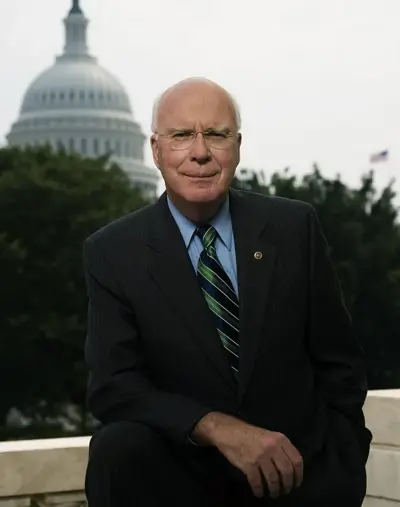
Patrick Joseph Leahy is an American politician and attorney serving as the president pro tempore of the United States Senate, and as the senior United States senator from Vermont. Leahy was first elected to the Senate in 1974, and previously served as president pro tempore from 2012 to 2015. He is the chair of the Senate Appropriations Committee.
