Robert Bork Quotes
The Supreme Court has made itself into a political institution … It has become a political prize and a political position.
Robert Bork, U. S. Solicitor General, Judge, U. S. Court of Appeals, Washington DC, Speech, C-SPAN American Perspectives, September 6, 2005, [See {59400}.]
Sourced by: Eigen's Political and Historical Quotations

Bork was the proponent of the theory that the Supreme Court constantly exceeded its authority and became a de facto legislature to make reforms the elite, intellectual elements of society desired as opposed to what the majority wanted.


This kind of attack on the Supreme Court by a prominent legal figure is quite unusual. However, the appointment of the ideologue, Clarence Thomas and his effect on the balance of the court triggered much controversy.


The reference was to the Presidential power to appoint Supreme Court Justices who will serve beyond his term.


For the phrase the "The Constitution follows the flag," see the Democratic Party platform of 1900.


Then Clarence Thomas replaced Thurgood Marshall on the Supreme Court, there appeared to be a majority of the court that would overturn Roe v. Wade and a woman’s right to an abortion. However it was an election year and the Chief Justice, a Republican, was concerned that if Roe was overturned the electorate might take it out on the Republicans, whose Solicitor Generals had fought to overturn Roe, at the polls. He therefore postponed the hearing of a Pennsylvania case, and then tried to postpone it again till after the election. Blackmun’s memo caused a majority of the court to vote to hear the case with no additional delay. Ironically, by a single vote, Roe was upheld.


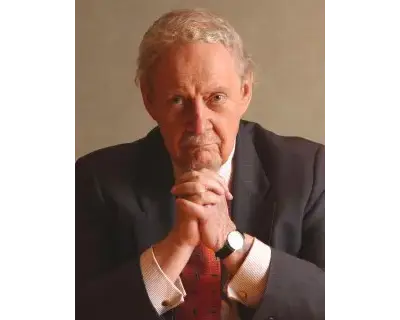
- Born: March 1, 1927
- Died: December 19, 2012
- Nationality: American
- Profession: Public Servant
Robert Heron Bork was an American judge, government official, and legal scholar who served as the Solicitor General of the United States from 1973 to 1977. A professor at Yale Law School by occupation, he later served as a judge on the influential U.S. Court of Appeals for the D.C. Circuit from 1982 to 1988. In 1987, President Ronald Reagan nominated Bork to the U.S. Supreme Court, but the U.S. Senate rejected his nomination.
