Jessie Applegate Quotes
The Sioux would be much opposed to the passage of so large a body through their country, and would probably resist it on account of the emigrants destroying and frightening away the buffaloes, which were then diminishing in numbers.
Large wagon trains of settlers crossed the content on their way to the Oregon Territory. The Sioux Indians whose land the wagon trains had to pass through often attacked the wagon trains in a vain effort to discourage others from passing through the area. The Sioux believed that the large wagon trains frightened the buffalo away, which was probably not a significant factor in the diminishing of the buffalo herds. The Indians and white hunters both over-hunted the buffalo which became few in numbers. With modern wildlife management Buffalo are not only back but are plentiful and being raised for their lean meat which has become a delicacy.
Jessie Applegate, 1811-1888, Pioneer, Author, and Member of the Oregon Provisional Government, The Overland Monthly, August 1868
Sourced by: Eigen's Political and Historical Quotations

The first Native American to become a General Officer. Appointed by President Grant in 1869


Justification for policy of settling all Indians west of the Mississippi River.


Note that there was still a serious attempt to coexist with the Indians and to pay for lands that whites moved into. This would change radically in the administration of Andrew Jackson who would replace Adams.

Most of her modern admirers tend to repress this quotation which is very embarrassing for most modern conservatives. However, there is a minority of thinkers who maintain that land, unused, is open to anyone who will make use of it to improve civilization. Many conservationists, in contrast, extol unused land for preservation.

Carson was one of the few Indian Agents who spent every penny of his budget on the Indians as opposed to himself. He was married to an Indian woman and was close enough to many Indians that he understood their resentment whenever they came into a town. They were treated terribly and while most of them were literally starving, seeing the white opulence produced resentment.


This passage describes the process of readying wagon trains and provides insight to the motivations of the settlers. El Dorado was the city or gold of Spanish legend and California and Oregon were the hope of so many.

The central Indian policy problem for Jefferson’s Administration was the fact that most Indians hunted for subsistence and the amount of land needed to support a hunting society was per capita much greater than an agricultural and especially an industrial one. Jefferson had no personal animosity against the Indians as many in his day did. But he perceived the need to obtain Indian lands for white agricultural use.

The months later, Colorado “volunteers” attacked a Cheyenne village flying and American and White flag, killing the women and children at what would come to be known as the Sand Creek Massacre.


if trade between the British and the Sioux were terminated The essential difference between the British and American interests were that the Hudson Bay Company—the English authority in Canada—was generally interested in short term commercial profits from trading including guns and alcohol while the Americans wanted pacification so that the Westward expansion and growth of the country could move forward. To the Americans at the time, it was a forgone conclusion that the few Indians would have to share their land with the more numerous whites. The different between doves and hawks at the time was how. The hawks wanted to simply drive the Indians out. The doves like Meriwether wanted to develop a trading dependency on America for modern goods. Therefore, the problem boiled down to making America the sole supplier of most goods. The strategy did not work as the bloody history of relations with the Sioux will attest.
Self Given Title. The governor distinguished between friendly Indians from others to the consternation of Bacon and his followers.
This was the beginning of the Jeffersonian effort culminating in the Corps of Discovery and the Lewis & Clark Expedition. Presidential, confidential memoranda to the Congress were more common then than now when they have become a rarity.
First Indian to hold the position
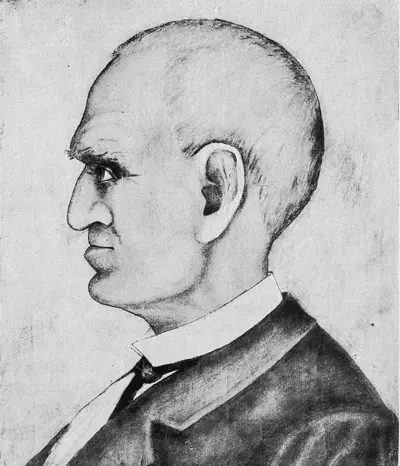
Jesse Applegate was an American pioneer who led a large group of settlers along the Oregon Trail to the Oregon Country. He was an influential member of the early government of Oregon, and helped establish the Applegate Trail as an alternative route to the Oregon Trail.
