VLADIMIR JABOTINSKY
(Ze'ev Jabotinsky)
Although Jabotinsky believed that the Arabs would have to be defeated militarily—see {604497}—he and the other Zionist leaders assumed that the eventual state would have Arab citizens. From this beginning, the principle of equal rights and participation in the politics and public affairs of the Jewish state was in the design. See {587034} as to how this manifested itself. The rights possessed by the Arab minority of Israel exceeds not only those of Jews in any Arab nation, and exceeds those of any minority in an Arab state. And because Israel is the only democracy in the Middle East, the Arabs of Israel possess more political rights than do Arabs anywhere else in the Middle East. The number of Arab political parties in Israel is larger than that of most Arab nations where opposition parties are rarely permitted.
Jabotinsky was a strong advocate of the Jewish Zionist movement not concerning itself with moral lapses and excessive zeal as many of the idealistic Zionists did, looking for a kind of Jewish Utopia. He argued that the British had done awful things when their national interest was threatened and the Arabs were far worse than almost any group of peoples. Therefore, the Zionists were entitled to use the methods of the other nations and Jews should not be the only people on earth that should be castigated for conquering a land and people. He particularly thought that even the United States which was better than almost all other nations had killed the Indian and driven him out of his own land. Why not the Jews? There has always, since he wrote this, been a minority of Zionists and Israelis who agree with the Jabotinsky view, but his view has never become a majority position of policy of Zionism or Israel.
At that time Jews in Palestine were in the minority. The issue of how to obtain the land was hotly debated amongst Jewish groups. Jabotinsky was at one extreme—colonize and take the land just as the Arabs had done to the Jews when there was a Jewish majority. His view did not however prevail. The policy was to buy the land from individual Arabs and Jewish land up to 1948 was obtained that way. In that year the UN partitioned Palestine and 11 Arab armies attacked the new state of Israel and asked the Arab civilians to leave the area so that the Army could cleanse it of Jews. Many did not, and they or their descendants are still on their land or have sold it. The Arabs who left, were suspected of being possible collaborators or terrorists, and they have never been paid for their land or allowed to return. Compensation is still in dispute. At the same time Jews driven out of Arab countries by law and the military have never been compensated or given any right of return either.
Arguing that the Arabs will never agree willingly to a Jewish state:
This position is a classical example of what some call a “hard line” negotiation stance. It argues that the enemy will never agree to anything that would be reasonable or acceptable to you UNTIL he has given up all hope of getting everything he wants. So this approach says there is no point in even discussing or negotiating anything until the military and economic and diplomatic situation is such that the other side has no hope of winning all it wants. In the case of the Arab Israeli dispute, for 50 years the Arabs believed that they would defeat the Israelis and push them out of the Middle East. For almost 50 years they would not even sit at the same table and negotiate anything. After starting and losing several wars, and falling further and further behind, the moderates began to be reasonable and hinted that they would accept Israel’s right to exist. However, there are some Israelis who argue as Jabotinsky did that there should be no discussions at this time until Hamas and all the terrorist groups have either given up or have been disarmed. This sort of hard line has rarely led to peace—especially if there are hard liners on both sides. They say never negotiate when you are weak. However if you are strong, there is no imperative to negotiate.
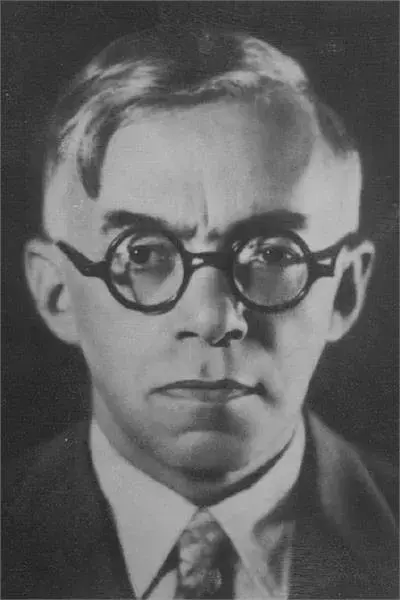
Ze'ev Jabotinsky, MBE, was a Russian Jewish Revisionist Zionist leader, author, poet, orator, soldier, and founder of the Jewish Self-Defense Organization in Odessa. With Joseph Trumpeldor, he co-founded the Jewish Legion of the British army in World War I. Later he established several Jewish organizations in Palestine, including Betar, Hatzohar, and the Irgun.
