Joseph Stalin Quotes
The Russian Czars did a great deal that was bad. They robbed and enslaved the people. They waged wars and seized territories in the interest of landowners. But they did one thing that was good—they amassed an enormous state.
Joseph Stalin, 1879-1953, Russian Premier, Toast, Home of Marshal Kliment Voroshilov, November 7, 1937 [Revolution Day]
Sourced by: Eigen's Political and Historical Quotations

In Russia at the time, serfs were little better off than slaves. Not only did they have to obey their landlords in all things, but any who advocated disobedience on their part were beaten and sent to Siberia. Exile to the Siberian Gulags was not an invention of the Communists of the 20th century although they used that punishment in unprecedented numbers. It was used by the Czars and the Empress.


What is fascinating about this quotation is that England itself was an aristocracy with a monarchy and very few elements of fairness and equality. The aristocracy and the monarch very much used the system and the common people for their benefit. However, the degree of abuse and tyranny and absence of any sense of equity, shocked even this English aristocrat. Behoof was a Middle English word derived from words that mean to profit from. By the time he used it, it meant benefit or advantage—a slightly wider meaning, but even in 1591 it was not a commonly used words but one used more by the intelligentsia of the day.

The speech writer, Anthony R. Dolan, had written, “Now and forever, Russia is an Evil Empire. Reagan crossed out “Now and forever” as he had the optimism that the Soviet Union would fall and Russia would reform at a time when only Senator Pat Moynahan had ever suggested the idea.

Executed by the English for his part in the Easter Uprising.

the Iraqi invasion of Kuwait


This quotation provides an insight into Stalin’s bizarre and ruthless character.

Eggleston was an accomplished writer who had served in the Confederate army of the Civil War. 20 year after the war he wrote a series of articles for the prestigious Northern Atlantic Monthly trying to convey the war from the Southerner’s point of view.


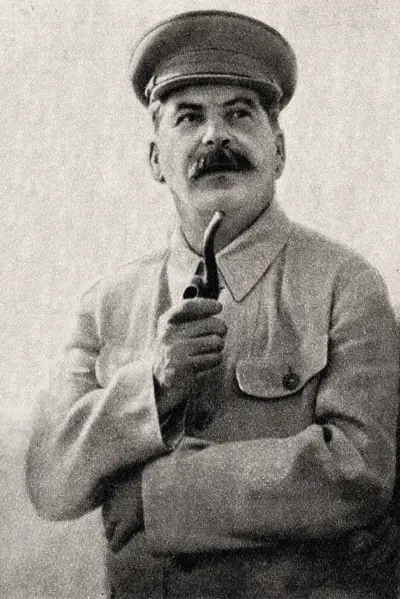
Joseph Vissarionovich Stalin was a Georgian revolutionary and the ruler of the Soviet Union from 1927 until 1953. He served as both General Secretary of the Communist Party of the Soviet Union (1922–1952) and Chairman of the Council of Ministers of the Soviet Union (1941–1953). Despite initially governing the country as part of a collective leadership, he ultimately consolidated power to become the Soviet Union's de facto dictator by the 1930s. A communist ideologically committed to the Leninist interpretation of Marxism, Stalin formalized these ideas as Marxism–Leninism while his own policies are known as Stalinism.
