Gilbert K. Chesterton Quotes
The reformer is always right about what is wrong. He is generally wrong about what is right.
Gilbert K. Chesterton, 1874-1936, English Writer, Illustrated London News, October 28, 1922
Sourced by: Eigen's Political and Historical Quotations

1st Duke of Wellington


Fiji had been divided ethnically between the indigenous tribes and Indian immigrants. The latter were pushing for modern democracy and the latter wanted it tempered by traditional authority of tribal leaders and traditional values.


Father of Harriet Beecher Stowe and Henry Ward Beecher. Father of Harriet Beecher Stowe and Henry Ward Beecher

China was going though a major change of economic structure and national policy, moving to a Western style, capitalist, market economy. This was led by Zhao and Deng. However there were ensconced communist, Marxist idealogues still in place in the government, and a few of them were very vocal about their negative reaction to this abandonment of socialist principles. One economists who was particularly vocal was thus warned and reprimanded by Zhao. He got the message.


The impication is that small changes are just as hard often and might be easier than large changes.


1st Earl of Beaconsfield
See {585430} for a classic example of this principle.


Historically, there are two situations where major changes are made in societies: 1) After great crises—wars, depressions, plagues etc. 2) At times of great prosperity when people are feeling very generous and magnanimous.

Stalin was then only 26 years old. This was more than a decade BEFORE the Russian Revolution and Stalin was a young left wing revolutionary planning how to bring about a revolution and how the society should operate thereafter. He was then much the youthful, intellectual, Georgian idealist.

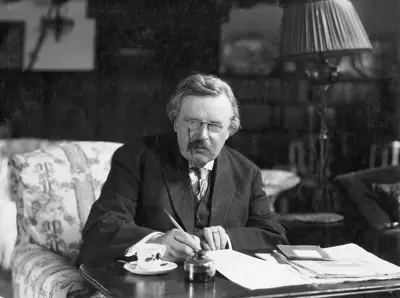
Gilbert Keith Chesterton KC*SG was an English writer, philosopher, lay theologian, and literary and art critic. He has been referred to as the "prince of paradox". Time magazine observed of his writing style: "Whenever possible Chesterton made his points with popular sayings, proverbs, allegories—first carefully turning them inside out."
