Charles Henry Parkhurst Quotes
… the polluted harpies that, under the pretense of governing this city, are feeding day and night on its quivering vitals. They are a lying, perjured, rum-soaked and libidinous lot
Charles H. Parkhurst, 1842–1933, Reformer & Pastor of Madison Square Presbyterian Church, New York City, President of the Society for the Prevention of Crime, Description of Tammany Hall Politicians of New York City, Quoted in Norman Thomas & Paul Blanchard, What’s The Matter with New York
Sourced by: Eigen's Political and Historical Quotations


After Harry Truman stated that certain civil rights protests were communist inspired in 1960, his former Secretary of State requested that he restrain himself on this subject. The allegations of a communist conspiracy had arisen from the FBI’s chief, J. Edgar Hoover.


Franklin was the superstar of his day in terms of popularity—especially in Europe. However, his informal, social style together with his late hours and popularity with the ladies, together with the fact that he seemed on good social terms with even enemies developed a combination of jealousy, frustration and even suspicion by some of his diplomatic colleagues.


O, you anarchic scum, you cowardly murderers, you leeches upon honest labor, you midnight assassins!
Otis and his paper were virulently anti-labor. See {617172} .


Mark Twain referring to and reflecting on his encounter with the Sultan of Turkey, Abdul Aziz.

George Barnsedale Cox, 1853–1916, was the corrupt, Republican, political boss of Cincinnati where he amassed a fortune of millions of dollars—hundreds of millions in today’s money—as a city party official in the early 1900s.

He was Governor-General of Korea when he made this statement. “Squeeze” was the word for bribes literally translated then from Korean. In most instances of racial discrimination “laziness” is almost always attributed to the so called “inferior” people, like the British with the Arabs, and the American Southerners with the Negroes.

Clark, after becoming one of the richest men in America, wanted to go into National Politics, but most people hated him so he could never win elected office. At the time, Montana selected their Senators by a vote of the State Legislature. So Clark bribed enough members of the legislature to become the Senator. However, the bribery scheme became a public scandal and the Senate refused to seat him. So the legislature had another vote in the next legislative session and Clark won again, and that time no one had the evidence of the bribes. But then, more about Clark became known, and he just served the one term.

In the early 20th century, the corruption in America was much worse than it is today. At the time, it was very common for members of Congress and State Legilators to take bribes from corporations whose interests they protected. Franchises, subsidies and other forms of corporate welfare was much more common. The reforms of the 20th centuries eliminated much of the corruption. At the same time, Americans, including Ms. De Cleyre knew much less about the details of foreign country’s foibles and weaknesses. So she underestimated the degree of corruption of foreign nations and made her judgment from the extensive corruption that then existed in the United States.


He said this as he threw them out of his White House office.
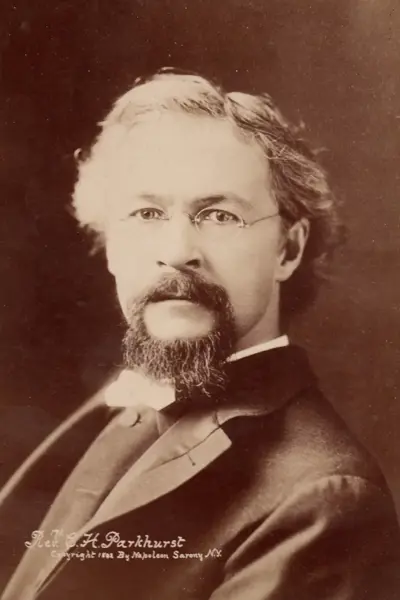
Charles Henry Parkhurst was an American clergyman and social reformer, born in Framingham, Massachusetts. Although scholarly and reserved, he preached two sermons in 1892 in which he attacked the political corruption of New York City government. Backed by the evidence he collected, his statements led to both the exposure of Tammany Hall and to subsequent social and political reforms.
