Arthur M. Schlesinger Jr. Quotes
Huey Long’s methods outdid the good he did with the results.
Arthur M. Schlesinger, Jr., Historian & Presidential Advisor (Democrat), Quoted on PBS, Ken Burns’ Huey P. Long, August 21, 2006
Sourced by: Eigen's Political and Historical Quotations

See {585638} for the kind of statement that led people to fear him as a dictator.

Africa and the Middle East, and the former Soviet States were particularly plagued with this problem, but is was also common in Asia and Latin America.

It took until the Presidency of Theodore Roosevelt until monopolies were regulated. Like many of the rapacious businessmen of his era, bribery of public officials was so common that he had no problem admitting this to a reporter who was interviewing him. His father Cornelius, one of the great, creative industrialists of America, was not at all of the same mindset or the same corrupt character and saw corporations and the Railroads as having an important role in America with substantial obligations to the society which enabled the economic development and supported the railroads. He described his son as a “blockhead”. William goes down in American history as the arrogant industrialist and capitalist whose wealth was produced by his talent of being born to the right father who built the great empire. At that time the bribery of members of Congress was direct with cash going directly into their pockets, unlike modern times where it is indirect in the form of Campaign contributions.


Rent Seeking: When a company, organization or individual uses their resources to obtain an economic gain from others without reciprocating any benefits back to society through wealth. Google Definition

Clark, after becoming one of the richest men in America, wanted to go into National Politics, but most people hated him so he could never win elected office. At the time, Montana selected their Senators by a vote of the State Legislature. So Clark bribed enough members of the legislature to become the Senator. However, the bribery scheme became a public scandal and the Senate refused to seat him. So the legislature had another vote in the next legislative session and Clark won again, and that time no one had the evidence of the bribes. But then, more about Clark became known, and he just served the one term.

1st Earl of Beaconsfield


Describing the career of Alexander Hamilton:


In early 1933 President Hoover was a lame duck, but the country was in the midst of a banking panic in the Great Depression. Hoover tried to get President-elect Roosevelt to join him in some joint action, but Roosevelt didn't want to commit to anything in advance and preferred not to associate his administration with the banking debacle of the Hoover administration. He felt that the public was so soured on Hoover’s incompetence and lack of apparent empathy, that anything he did with Hoover would be perceived fas bad and doomed to failure. What Roosevelt wanted to do is diminish fear and despair and have new hope. However, Hoover was erroneously told by aids that Tugwell, a Roosevelt assistant, had suggested that Roosevelt should let the situation deteriorate, and then there would be more to blame on the Republicans when Roosevelt took office. Tugwell was as far from being a partisan politician as one could get. He was an academic with a PhD in agricultural economics. He had never been involved in politics before. Surprisingly, Hoover believed the story about Tugwell, but by then, the was a very frustrated man who felt that he had almost no good options.


While that is certainly true and has been borne out by history, the same thing can be said of democratic rulers and even many democratic politicians of lower rank. Yes men abound and not politicians not only want them but arguably need them in order to maintain the assurance and positivity that most voters associate with good leadership.


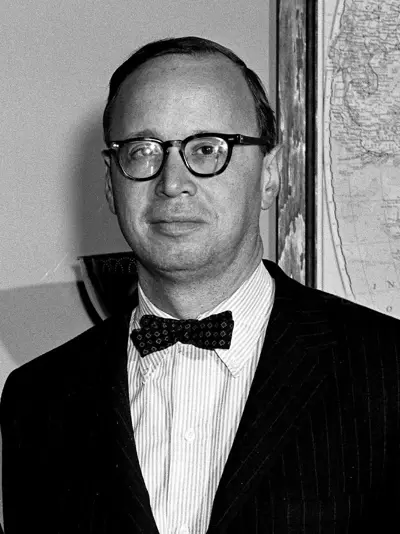
Arthur Meier Schlesinger Jr. was an American historian, social critic, and public intellectual. The son of the influential historian Arthur M. Schlesinger Sr. and a specialist in American history, much of Schlesinger's work explored the history of 20th-century American liberalism. In particular, his work focused on leaders such as Harry S. Truman, Franklin D. Roosevelt, John F. Kennedy, and Robert F. Kennedy. In the 1952 and 1956 presidential campaigns, he was a primary speechwriter and adviser to the Democratic presidential nominee, Adlai Stevenson II. Schlesinger served as special assistant and "court historian" to President Kennedy from 1961 to 1963. He wrote a detailed account of the Kennedy administration, from the 1960 presidential campaign to the president's state funeral, titled A Thousand Days: John F. Kennedy in the White House, which won the 1966 Pulitzer Prize for Biography or Autobiography.
