Henry John Temple Quotes
The people of this country are remarkable for their hospitable reception of foreigners, and for their forgetfulness of past animosities. Napoleon Bonaparte, the greatest enemy that England ever had, was treated while at Plymouth with respect, and with commiseration while at St Helena. Marshal Soult, who had fought in many battles against the English, was received with generous acclamation when he came here as Special Ambassador. The King of the French, Mons. Guizot, and Prince Metternich, though all of them great antagonists of English policy and English interests, were treated in this country with courtesy and kindness. But General Haynau was looked upon as a great moral criminal; …. But Viscount Palmerston can assure your Majesty that those feelings of just and honorable indignation have not been confined to England, for he had good reason to know that General Haynau's ferocious and unmanly treatment of the unfortunate inhabitants of Brescia and of other towns and places in Italy, his savage proclamations to the people of Pesth, and his barbarous acts in Hungary excited almost as much disgust in Austria as in England, and that the nickname of "General Hyæna" was given to him at Vienna long before it was applied to him in London.
3rd Viscount Palmerston. Julius Jacob von Haynau, 1786–1853, was a vicious Austrian General who had committed many atrocities in Italy and Hungary which today would be considered War Crimes and Crimes Against Humanity. He even had women publicly flogged who were heard saying anything sympathetic about the freedom fighters who the General suppressed brutally. On a visit to London, he was attacked and beaten by draymen at the Barclay & Perkins brewery, which he was visiting. (When Giuseppe Garibaldi came to England in 1864, he insisted on visiting the brewery to thank "the men who flogged Haynau.") The Austrian government complained to Queen Victoria about his treatment and the quotation is from the Foreign Minister’s letter reporting the facts to the queen. A letter of apology was sent by Temple to Austria, but it was worded in such a way that it was clear that the English government felt that the beating should never have taken place but it was not morally unjustified. This even angered the Austrians more. Haynau was known and despised by military men the world over. See {630983} for an American use of Haynau’s name.
Henry John Temple, 1784-1865, British Prime Minister (Whig), Letter to Queen Victoria, October 8, 1850
Sourced by: Eigen's Political and Historical Quotations

Julius Jacob von Haynau, 1786–1853, was a vicious Austrian General who had committed many atrocities in Italy and Hungary which today would be considered War Crimes and Crimes Against Humanity. He even had women publicly flogged who were heard saying anything sympathetic about the freedom fighters who the General suppressed brutally. Haynau was known and despised by military men the world over. So many of the Confederate and Union officers understood the insult. General Butler was not accused of atrocities of the usual type, but as the Commanding Union General of New Orleans, he was not very chivalrous to the Southern women of the city who were particularly effective in harassing the Union Officers and men. For example, the women would store the urine and feces of the chamber pots of the house and wait until Union soldiers, preferably officers, walked by and unloaded the waste on them from upper story windows. Butler ordered that women who harassed the soldiers could be “treated like common prostitutes.” Butler also turned a blind eye to the looting of the activist women’s silver and other valuables.


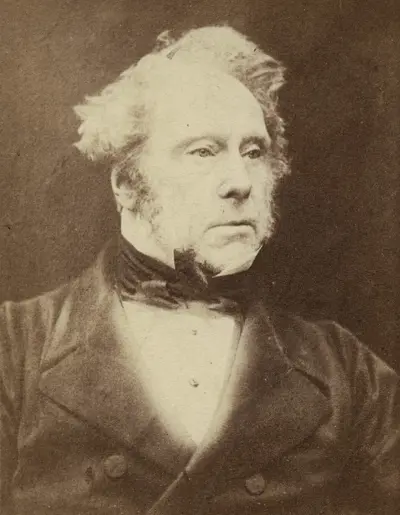
Henry John Temple, 3rd Viscount Palmerston, KG, GCB, PC, FRS was a British statesman, who was twice Prime Minister of the United Kingdom in the mid-19th century. Palmerston dominated British foreign policy during the period 1830 to 1865, when Britain stood at the height of its imperial power. He held office almost continuously from 1807 until his death in 1865. He began his parliamentary career as a Tory, defected to the Whigs in 1830, and became the first prime minister from the newly-formed Liberal Party in 1859. He was highly popular with the British public. David Brown argues "an important part of Palmerston's appeal lay in his dynamism and vigour."
