Benjamin Griffith Brawley Quotes
The Negroes who came to America directly from Africa in the eighteenth century were strikingly different from those whom generations of servitude later made comparatively docile. They were wild and turbulent in disposition and were likely at any moment to take revenge for the great wrong that had been inflicted upon them. The planters in the South knew this and lived in constant fear of uprisings. When the situation became too threatening, they placed prohibitive duties on importations [of Slaves], and they also sought to keep their slaves in subjection by barbarous and cruel modes of punishment, both crucifixion and burning being legalized in some early codes. On sea as well as on land Negroes frequently rose upon those who held them in bondage, and sometimes they actually won their freedom.
The point about the negroes who were born into American slavery being less aggressive than those captured and transported to America is often overlooked. Slavery not only was cruel, moral, and inhuman in its own right, but also took its toll over generations as a result of the psychological effects of the terror of slavery. Despite these, it is amazing how resiliant the American Blacks were under those circumstances. in some cases one or two saves escaped after committing a violent act as they had little to lose for trying as they wold be killed if caught. A few of these escaped to the North and others reached Southern Cities like Charleston where there was a small free black community in which they could be absorbed.
Benjamin Griffith Brawley A Social History of the American Negro 1921
Sourced by: Eigen's Political and Historical Quotations

This fear was great among many who were abolitionists as potentially there might be mass slaughter of all Southern whites.

When the Confederate Government realized that the Union was planning to arm escaped slaves and induct them into the Union Army, they quickly passed a law that declared any escaped slave who joined the Union Army or wore its uniform was guilty of Treason and would be executed. Most Union Generals one way or another got word to the Confederate Officers that they had better treat all Negro Union Soldiers as prisoners of war. Even President Lincoln warned the South. Butler, however, had a large number of Negro troops in his area and had heard threats of some of the Southerners to execute Black prisoners of war. He had a way of making things very clear, and he was able to prevent murder of any of his Negro troops despite the Treason law.

Parker and other escaped slaves in Christiana fought off slave catchers and killed the slave owner leading them. Charged with treason, he escaped to Canada with his family and lived there the rest of his life. While not a polished writer, after he himself had escaped and went to Christiana and leaned to read and write. He wrote this narrative of his life as a slave—one of the few written works we have from slaves.


This statement was made long after slavery had been abolished and Jim Crow was on the rise in the South.


The Sally was owned by Nicholas Brown and Company and this voyage was financially unsuccessful with 109 out of 196 slaves dying in board. Brown, of the family that founded Brown University, was discouraged by this voyage and withdrew from the slave trading business. See {641475}. American naval hero, John Paul Jones, served under Hopkins in the American Revolution.

This leading “conductor” of the Underground Railroad carried a loaded pistol which she brandished if escaping slaves would get discouraged and not follow instructions endangering the others or the organization itself. The Underground Railroad referred to the clandestine method that Tubman and other “conductors” would risk their own lives by going down South and guiding escaped slaves through a series of safe houses and locations “stations” until they reached Canada where slaves could not be legally recaptured.

Christian had just briefed the President about the riots in many cities after the assassination of Martin Luther King. Christian had expressed surprise that the Blacks were so violent.
It is not known what actually happened thereafter. However, from the intensity of this letter, it is likely that unless Rice was killed or wounded in battle, he went to get his daughter and deal with her “owner”. An interesting side note is that the slave owner actually sent the letter to the Commanding Union General Rosecrans complaining. The mental set of Southern Slave Owners was incredible to us today, but that is one of the reasons that Reconstruction was so difficult. Southerners could not see anything that they did that was wrong. Unfortunately, there are a few racist people with those views still in America plus many throughout the world.

The “stake” refers to burning at the stake, one of the methods of murder used in the South to intimidate Negroes and whites who might hold anti-slavery sentiments.

In 1831 a slave preacher, Nat Turner, led a rebellion in North Carolina killing over 50 whites. Even though Turner and the rebels were captured and executed, whites throughout the South, took vengeance on any slaves they could find. This description was of a North Carolina community.
Louis Napoleon Bonaparte. The “colonies” to which we was referring were the French Colonies in the Caribbean—particularly Haiti. The Black slaves had revolted against the slave-owners and had taken over all positions of authority and wore the uniforms and symbols of power including the epaulettes—the gold braid shoulder pieces that were symbols of high rank in military and diplomatic uniforms which were worn on all official occasions. Napoleon never did make good on his vow. He had many more problems with his own wars and governance in Europe. This quote does demonstrate the racism that existed in supposedly tolerant France.


Butler was at the time the Union general in charge of Louisiana. He had on his hand a large group of slaves whose owners had abandoned the area. There was no emancipation yet. He wrote for instructions. The result was the first actual emancipation of slaves.


Ironically, events later supported the truth of his statement. He was wrong about the parties however. It was the South who denied liberty to a very large part of their population, and it was the “unconquerable will” of the enslaved Negroes that eventually prevailed. It is hard for most of us in modern times to understand why Davis and other Southerners saw themselves as having freedom curtailed over an economic factor—chattel slavery—and not see that the institution of slavery was a total denial of freedom to a huge part of their population. See England’s Dr. Johnson XXXXX for a classic contemporary statement of this contradiction.

This quotation illustrates how the racist South defeated the objectives of the Civil War and Reconstruction by the institution of Jim Crowe laws and so called “states’ rights”. It would take more than another half century for the Yankees and the vast majority of the non-Southern Americans decided that the Southerners could no longer “do as they pleased” with fellow human beings. It is hard to believe for us today that an entire section of our country could actually believe in the morality of the South but that is the tragic history of race relations in America.

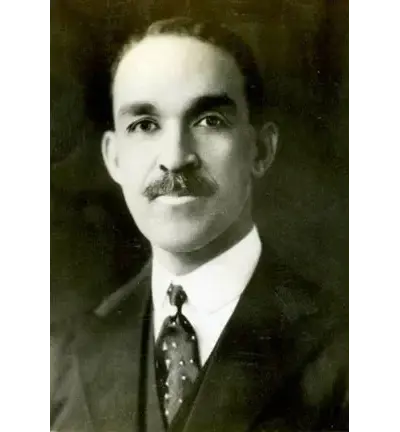
Benjamin Griffith Brawley was a prominent American author and educator. Several of his books were considered standard college texts, including The Negro in Literature and Art in the United States (1918) and New Survey of English Literature (1925).
