John Stuart Mill Quotes
The ne plus ultra of wickedness ... is embodied in what is commonly presented to mankind as the creed of Christianity.
Mill, John Stuart. Autobiography. Longmans, Green, Reader, and Dyer, 1873, ch. 2.


This particular quotation was very damaging to Christians of the era. Voltaire was almost universally regarded as the greatest mind of Europe at the time. He was consulted by powerful monarchs and others throughout Europe. He influenced major figures of the day like Catherine the Great. Voltaire did believe in God. See {621200}.

Some of the founding fathers were deeply religious men while others were not so. Some varied in their believes at different times of their lives, and a number were not very facorable towards orthodox religion. At the time, Roman Catholic and Protestant churches were persecuting other religions throughout Europe and people were still being killed for their heretical beliefs. Most important to some of them, kings and other monarchs whom they abhorred, all at the time claimed the Divine Right of Kings and the established churches were the most important support for monarchs. At the time most organized religions were opposed to freedom of conscience and certainly opponents of separation of church and state. American churches tended to take on American values but were never given the chance to dominate the American government they way many had in Europe and the rest of the world.
Jefferson was a deist but had little love for the organized religions and did not consider the Bible as the revealed word of God.

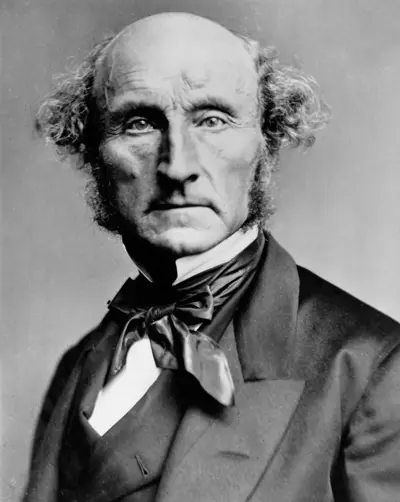
John Stuart Mill, usually cited as J. S. Mill, was an English philosopher, political economist, Member of Parliament, and civil servant. One of the most influential thinkers in the history of classical liberalism, he contributed widely to social theory, political theory, and political economy. Dubbed "the most influential English-speaking philosopher of the nineteenth century", he conceived of liberty as justifying the freedom of the individual in opposition to unlimited state and social control.
