James Mill Quotes
The monarchy and aristocracy have all possible motives for endeavoring to obtain unlimited power over the persons and property of the community. The consequence is inevitable: they have all possible motives for combining to obtain that power.
James Mill, 1773–1836, Scottish historian, economist, political theorist, and philosopher, Father of John Stuart Mill, Essays on Government, etc., 1828
Sourced by: Eigen's Political and Historical Quotations


1st Viscount Bolingbroke. See {627799} for the origin of the bias against merchants and money men. It also represents a rigidity of class structure that characterized England until very recently. The landed gentry were the first class citizens. Usually titles went with the land. In America, someone who would be successful as a merchant or a banker could achieve the highest of social status and political influence. This was not true in England where a merchant that was far more wealthy than a landed lord was not accepted by the aristocracy.


This is a variation of the famous Lord Acton quotation: {292904}.
The Russian autocrat found it hard to believe that peasants and merchants could have any rights at all as they did in England. He faulted the female ruler, the great Queen Elizabeth I. By modern standards Elizabeth had awesome power and the English People very little, but Elizabeth was relatively restrained in her use of power and paid attention to the effect of affairs of state had on the people." Ivan the Terrible


These unfortunate characteristics of Germany at that time, produced the aggressive nation that started two world wars. Looking at Germany a century later, the country has changed radically—especially the three factors described in this quote. Germany has become very much like the rest of Western Europe and America.


He was expelled from Parliament for such.
The Diggers were a religious-economic movement that even today would be considered very radical. They advocated the right of the poor to go onto public lands and farm them—thus the name “Diggers.” Beyond their opposition to the private ownership of land to the exclusion of the poor, Winstanley and the Diggers promulgated another very modern doctrine: That the poor should take the responsibility and have the right to determinine how the society should provide for the poor. A version of this became one of the Mottos of the Poverty Program of 1964. See {616966}.


The United States money was then on the Gold Standard. The country was growing and needed more money in circulation. But most of the gold that might be available was in England and English bankers could control much of the U. S. economy. The Populists and the Democrats wanted us to use silver to back U. S. money as there was plenty of silver in the United States. The Republicans would not relent and depression was upon the country. A half century later, it would be Republican President Richard M. Nixon, who took the United States off the gold standard. Lease was far ahead of her time.


The Bank was privately owned. Jackson was a major opponent of the Bank. See his description {630650} .

This quotation is a great demonstration of how much wiser and the better politician of all the crowned heads of Europe that Queen Victoria was. There were stirrings of freedom and desire for parliamentary government throughout Europe. Queen Victoria, even though and perhaps because she was a young woman, had a great feel for fairness and reasonableness and had read a great deal of history. There were some radical red socialists calling for complete radical revolution scaring European Royalty profoundly. They reacted very conservatively and with reaction, reverting to more tyrannical practices of the past urged in that path by very conservative, right wing advisors. Victoria also had little respect for some of the monarchs who had little interest in their people and much with their personal power and wealth. In the end, it was England which was the only nation which never had a serious radical socialist / communist threat, and that had much to do with Victoria’s political acumen and wisdom.
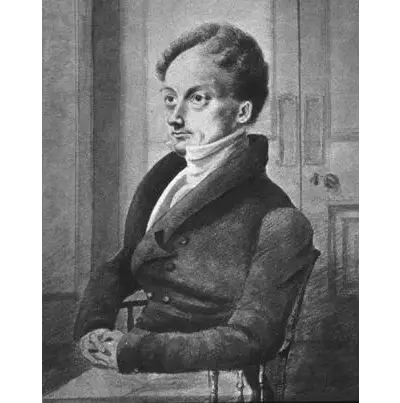
James Mill was a Scottish historian, economist, political theorist, and philosopher. He is counted among the founders of the Ricardian school of economics. He also wrote the monumental work The History of British India. He was the first writer to divide Indian history into three parts: Hindu, Muslim and British, a classification which has proved surpassingly influential in the field of Indian historical studies, but which is seen in recent decades as being deeply problematic.
