Mustafa Akyol Quotes
The main bone of contention is whether Islamic injunctions are legal or moral categories. When Muslims say Islam commands daily prayers or bans alcohol, are they talking about public obligations that will be enforced by the state or personal ones that will be judged by God?
Akyol, Mustafa. Islam Without Extremes: A Muslim Case for Liberty. W. W. Norton & Company, 2011, p. 282.


Theological & Legal Expert. The Sunnah, like the Koran, has statements of the Prophet, Mohammad. A fatwa is a religious legal ruling. This particular Fatwa shows the great difference between the Islamic State and a Republic or Democracy. In the latter forms, any religious practices must be consistent with the Constitution. Even though blasphemy might be prohibited by a religion, the United States Constitution for example protects anyone’s right to be blasphemous. In the Islamic system any constitution or law is subservient to and must be consistent with, the sayings of the Prophet Muhammad. In that sense, unless the Muslim populated nation is secular like Turkey, then the governments are partial or total theocracies.


This is not terribly different however from Christians and Jews selectively quoting the Bible.

His views are a mix of modernism and fundamentalism. He favors democracy and elections but also favored the Taliban destroying the great ancient Buddha statues when he was called an idol worshipper for urging the preservation of art.


Legal Religious Ruling. This is an example of a source of tension between some Muslims and others. Non-Muslims are required to have a Muslim Education in Muslim countries, but they insist that any required Christian or secular education in a non Muslim country is anti-Islamic.

This was one of the sagest pieces advice regarding Islam given in the early 20th century.
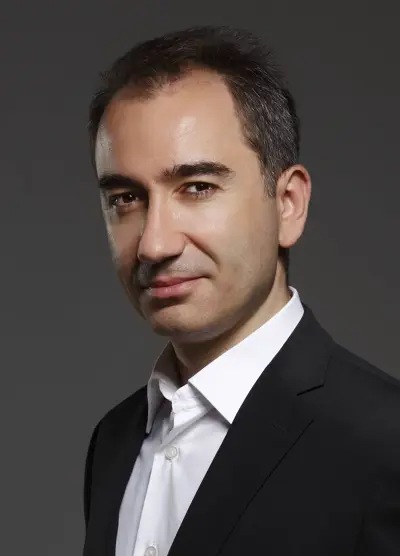
Mustafa Akyol is a Turkish writer and journalist. He is the author of Islam without Extremes: A Muslim Case for Liberty, long-listed in 2012 for the Lionel Gelber Prize, a literary award for the world's best non-fiction book in English. He became a contributing opinion writer for the International New York Times in 2013. He is mainly famous in the western world for his arguments that Islam is highly compatible with classical liberalism and Enlightenment values, and that Islamic practice and the governance of Muslim-majority countries should be reformed along those lines similar to what previously happened in Christian-majority Europe.
