Mumtaz Ali Quotes
A Muslim has the right to live as his religion wishes him to, and under Sharia he can finally live like a true believer in his faith
Mumtaz Ali, Canadian Attorney & Director, Islamic Institute of Civil Justice, BBC World Edition, August 26, 2004
Sourced by: Eigen's Political and Historical Quotations


The Governor had introduced Sharia, Islamic Law, into his state. When a woman was sentenced to death by stoning, the Federal Government nullified the sentence on the ground that stoning was not morally right nor was a death penalty for her actions. The woman was not executed


This principle explains why so many Islamic governments are monarchies and dictatorships. Islamic legitimacy requires the ruler to be sure that the society functions according to Sharia (Islamic Law). It is better if the ruler is selected by the senior and responsible members of society but that is not required. He could be a king or a dictator. And it is irrelevant how he comes to power under this interpretation so long as he rules following Islamic law. Saudi Arabia is an excellent example of a dictatorial monarchy which is considered legitimate since it follows Islamic law. Some modern Muslims do not support this traditional view and believe that a legitimate ruler must be selected by the will of the people.


She was born a Muslim herself and her life has been threatened by other, Muslims who are fundamentalists who are living proof or her point.

This quotation illustrates the difficulty when a jurisdiction adopts an established religion. From a freedom point of view, it is bad that Hamas insisted on all these rules for Muslims, but when they insist that Christians (and others) follow them as well, it becomes very difficult to have a harmonious society.

While the author represents the views of most Islamic Fundamentalists, a similar view is held by many ulta-orthodox Jews and fundamentalist Christians also.
Fundamentalist Christians and Jews believe that the Bible is the revealed word of God. In Islam, not only is the same position taken, but it is specifically forbidden to even think about or have a personal opinion about a matter which appears in the Koran—decided by Allah and revealed to the Prophet Muhammed.

In an orthodox Muslim nation, freedom of speech as a right is impossible.

Theological & Legal Expert. The Sunnah, like the Koran, has statements of the Prophet, Mohammad. A fatwa is a religious legal ruling. This particular Fatwa shows the great difference between the Islamic State and a Republic or Democracy. In the latter forms, any religious practices must be consistent with the Constitution. Even though blasphemy might be prohibited by a religion, the United States Constitution for example protects anyone’s right to be blasphemous. In the Islamic system any constitution or law is subservient to and must be consistent with, the sayings of the Prophet Muhammad. In that sense, unless the Muslim populated nation is secular like Turkey, then the governments are partial or total theocracies.
A fatwa is a religious legal ruling.

“Qur’an” is another way of spelling “Koran”. The belief in the perfection of the Koran is fairly common in Islamic nations. If Sharia is the civil law, as many Muslims insist that it is or should be, then there is no system of amendment and nothing that has occurred or has been learned since 800 AD that is any reason to improve or modify the law. Modern Islamic nations cope with this problem in one of three ways. The Fundamentalists take the Koran literally in all things and nothing is ever amended or modernized. Modernists will treat the Koran and Sharia as metaphorical and interpret it in the light of the modern world. More secular nations (like Turkey and Indonesia) reject Sharia as a civil legal system or as a source of inspiration of civil law.

This was one of the sagest pieces advice regarding Islam given in the early 20th century.

Gabriel exaggerates in the sense that while the quotation is correct for many Muslims, it is by no means true of all. Iran for example is an Islamic theocracy, but Turkey is a 99 percent Muslim nation which is totally secular and in some ways is much more restrictive of Islamic teaching and practice than most secular democracies. The fundamentalist Muslim view of the state and religion is essentially the same as the ultra orthodox Jews and Christians. It is true that a greater proportion of Muslims believe in the merging of civil and religious law than Jews and Christians, but by no means all. The non Arab Muslims are much less likely to see the unity of state and religion.

Unlike other conquerors who wanted their wealth, property, animals or women, this was an offer that was almost too good to refuse even if the community were well fortified and had organized soldiers. It is important to note that these options were not available to all people. The Prophet had decided to allow Jews, Christians and Zoroastrians to practice their religion and pay the fizya tax which was not very high. The Persians were Zoroastrians and hence the did not have to convert which most other people did. The Muslim conquest of Persia, therefore, was much easier than most other places.
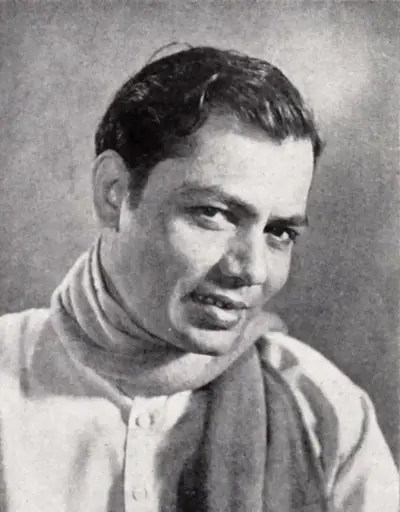
Mumtaz Ali was an Indian dancer and character actor in Hindi cinema from the 1940s to 1970s. He was the father of Indian actor Mehmood. He also had his own dance troupe "Mumtaz Ali Nites" which performed all over India. His career slumped due to his excessive drinking and his family fell into hard times, leading to his son Mehmood to work as a child artist and daughter Minoo Mumtaz to work as dancer in his stage shows and later in movies.
