Herbert Henry Asquith Quotes
The Irish on both sides are giving me a lot of trouble just at a difficult moment…. I sometimes wish we could submerge the whole lot of them and their Island for say, ten years, under the waves of the Atlantic.
the Protestants & the Catholics 1st Earl of Oxford
Herbert Henry Asquith, 1858-1928, British Prime Minister, Diary Entry, September 1914
Sourced by: Eigen's Political and Historical Quotations

This is an excellent example of the many public insults that the Irish religious leaders hurled at each other exacerbating the intercommunal tension between the Catholics and Protestants. There were amost no Irish leaders of either religion who tried to dampen the animosity and conflict.


Plunckett was the last Roman Catholic martyr to be executed in Britain. He was accused of conspiring against the state by allegedly plotting to bring 20,000 French soldiers into the country, and for levying a tax on his clergy to support 70,000 men for rebellion. The English have always feared ever since Henry VIII severed England from the Roman Catholic Church, that the Papacy was plotting to restore Catholicism to England and sponsor an invasion of Ireland. And indeed that was true in several cases, but nowhere near as many as the English imagined. In this case, paranoia prevailed, and the trial was pretty much a farce, but he was convicted and sentenced to be hanged, drawn and quartered which he was.

Prime Minister William Pitt, Edmond Burke, and Irish Patriot Henry Grattan had met with the king to discuss granting Irish Catholics rights to participate in government. The King was quite bigoted against Catholics, but England was at war on the continent and if Irish Catholics were angry enough, they might conspire with the Catholic French for an invasion of Ireland. When the Protestant members of the Dublin Corporation heard about the meeting, they immediately issued their own resolution to the King recommending the continued discrimination against Catholics. In a huge political battle in the English Parliament, Pitt and Burke were able to make some progress. The Penal Laws against Catholics that had been in force for a century were repealed. And Catholic men in Ireland were given the right to vote for members of the Irish Parliament. However, the Conservative Protestants blocked further reforms and Catholics were still not allowed to sit in Parliament of hold public office. Between this quotation and {639274} we see the Irish Protestants somewhat divided with the liberals wanting to give Catholics political equality and the Conservatives opposed.


1st Earl of Beaconsfield. O’Connell was an Irishman.

This is one of the great political putdowns in history. He in effect called Dundas a liar without ever being overt or nasty.

New Ross was under siege by Cromwell and his English Parliamentarian troops. After two days, the town tried to negotiate terms of surrender and one of the main things they asked for was freedom of religion to practice Roman Catholicism. This famous response set the stage for religious bigotry over the next years. Cromwell’s reasons for not allowing Catholicism to be practiced was not only one of religious zeal. At the time, the Roman Catholic Church was a major geopolitical power under a Pope who commonly supported or even dispatched troops for geopolitical and religious ends. The Vatican was particularly resentful of England for separating from the Church and asserting that the King of England was the head of the Church and not the Pope. Therefore Cromwell and many Englishmen had to deal with the reality that every practicing Catholic in the realm was a potential spy, traitor, and/or rebel. This fear of control of countries by the Pope strongly affected America, and was responsible for the defeat of the first Catholic Presidential Candidate, Al Smith. It was also a major factor in the election of John F. Kennedy so he dealt with it head on.

Not all the relations between Irish Catholic and Protestants were hostile. There was a commonality in their Irish nationality and many protestants—especially the educated and more sophisticated—were opposed to the restrictions imposed by England on the rights of the Roman Catholic to practice their religion. See {639274} for another example.

This is an excellent example of a theme that has been used since biblical times to justify massacres by military men. Namely that if the first town that you conquer is treated terribly enough, the word will get around and the next town the people will pressure their military to surrender to avoid the same fate. Therefore, they argue, as Ludlow does, that the massacre will reduce future violence. That perverse ethical logic has lasted for a long time. However, that was not the only motive here—vengeance was a major factor. This is another good example of the fact that many of the worst moral atrocities of men were perpetrated and led by men who thought that there were being moral and consonant with God’s will. See {639301} for Oliver Cromwell’s description of the massacre.

A delegation from Sinn Fein, headed by Arthur Griffith and Michael Collins, had negotiated a treaty of Irish Independence except that it did not cover Northern Ireland where the majority of the people wanted to stay a part of Britain. For 700 years, the Irish had fought for independence, and finally they got it for the vast majority of Ireland and the overwhelming majority of the Catholics of Ireland. The alternative to agreeing to the treaty was to continue the war between the IRA and the British Troops. At the time, the IRA was just about totally beaten and probably could not hold out another month. De Valera, a very shrewd politician, as the leader of Sinn Fein (and the IRA) would normally have headed the Irish Delegation. But he chose not to because he realized that they would never get independence for all 32 counties of Ireland as the British would not leave the Northern Ireland Protestants to their fates against their will. The best Ireland could get was Independence for all of Catholic majority Ireland. And he knew that public opinion would oppose giving up even one county becuse that was what the leaders had told the people for years. So De Valera let his two associates take the popular blame after he denounced the treaty with his famous quotation {639690}. Shortly after that, Michael Collins, the brilliant military Commander of the IRA who signed the treaty was assassinated. To many, it was as if De Valera had pulled the trigger. The treaty was ratified by a 7 vote margin by the Dail as there was no army left to fight, and the angry Irish electorate voted for De Valera as Ireland’s first President. The politician had won; the patriot had died.

A delegation from Sinn Fein, headed by Arthur Griffith and Michael Collins, had negotiated a treaty of Irish Independence except that it did not cover Northern Ireland where the majority of the people wanted to stay a part of Britain. For 700 years, the Irish had fought for independence, and finally they got it for the vast majority of Ireland and the overwhelming majority of the Catholics of Ireland. The alternative to agreeing to the treaty was to continue the war between the IRA and the British Troops. At the time, the IRA was just about totally beaten and probably could not hold out another month. De Valera, a very shrewd politician, as the leader of Sinn Fein (and the IRA) would normally have headed the Irish Delegation. But he chose not to because he realized that they would never get independence for all 32 counties of Ireland as the British would not leave the Northern Ireland Protestants to their fates against their will. The best Ireland could get was Independence for all of Catholic majority Ireland. And he knew that public opinion would oppose giving up even one county becuse that was what the leaders had told the people for years. So De Valera let his two associates take the popular blame after he denounced the treaty with his famous quotation. Shortly after that, Michael Collins, the brilliant military Commander of the IRA who signed the treaty was assassinated. To many, it was as if De Valera had pulled the trigger. The treaty was ratified by a single vote by the Dail as there was no army left to fight, and the angry Irish electorate voted for De Valera as Ireland’s first President. The politician won; the patriot died.

He was addressing the Conservatives of Ulster, the Northern Ireland province that was the center of the Orangemen movement of Irish Protestants who were fighting to retain 'Protestant Ascendency' -- which was the social, political and cultural domination of the Protestants (the minority) over the Catholics (the majority). This was best achieved by keeping Ireland a part of Great Britain as opposed to having Ireland as a separate, independent country.

Protestant ascendancy was the policy of keeping Protestants dominant while allowing Catholics to worship but to be politically, socially, and economically subservient to the Protestants.

This is a description of a massacre of Protestants (mostly English) by Catholic Rebels led by Phelim O’Neill. The Catholics whose religion had been compromised when English King Henry VIII severed all ties to the Pope and the Vatican and bound the Irish to that decision of his. The Irish Catholic peasants so resented the English that their hate caused massacres like this in the Irish Rebellion of 1641. Their anger was so great that Phelim O’Neill and his officers lost control of their troops who were bent on revenge.
About 2000 Irish were slaughtered while Cromwell only lost 64. In the Irish Rebellion of 1641, many English Protestants—men, women and even children were massacred by Catholic rebels who were out of control of their leadership. See {639336} for an example. Cromwell, when he landed in Ireland with his troops, made no bones about the fact that he was there to avenge the massacres of 1641 {639283} . This was his first “payback”. 150 years later the Irish Protestants memorialize the massacres of the Rebellion of 1641. The Catholics, memorialize, the massacre at Drogheda. Each group uses these and other similar events to justify their positions of antagonism against the other. See {639282} for a moral analysis of Cromwell’s action here.


This special collection brought in the huge sum of 300,000 Guilders. The Protestants in Catholic Ireland were persecuted as were the Catholics in most Protestant dominated lands. The Vatican raised money and armies to strengthen the hand of Catholic states and to foment revolution in Protestant states. Some of the protestant churches used the same methods to “interfere in the internal affairs of other countries” however. The early Americans were well aware of this history of religious struggles to become the State Religion, and this was one of the reasons they wrote the First Amendment. Without it and the others in the Bill of Rights, there would have been no ratification of the Constitution.

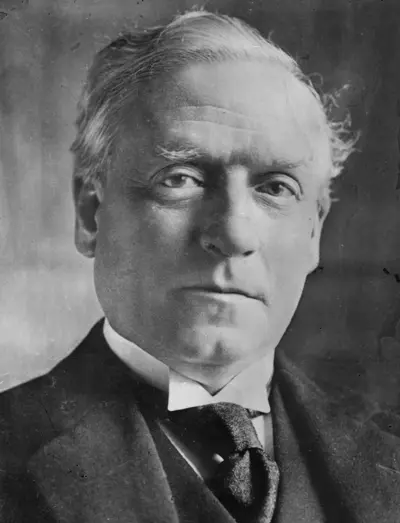
Herbert Henry Asquith, 1st Earl of Oxford and Asquith, KG, PC, KC, FRS was Prime Minister of the United Kingdom from 1908 to 1916. He was the last prime minister to lead a majority Liberal government, and he played a central role in the design and passage of major liberal legislation and a reduction of the power of the House of Lords. In August 1914, Asquith took Great Britain and the British Empire into the First World War. In 1915, his government was vigorously attacked for a shortage of munitions and the failure of the Gallipoli Campaign. He formed a coalition government with other parties, but failed to satisfy critics. As a result, he was forced to resign in December 1916, and he never regained power.
