Barry Goldwater Quotes
The homes of America are horrified and the intelligence of Americans is insulted by weird television advertising by which this Administration threatens the end of the world unless all-wise Lyndon is given the nation for his very own.
Barry Goldwater, 1909-1998, U.S. Senator (Republican, AZ), Republican Nominee for President, Remark in reaction to the “Daisy” TV Commercial which ends in a nuclear explosion, Quoted in Pete Hamill, “When the Client Is a Candidate”
Sourced by: Eigen's Political and Historical Quotations


There was much distrust of Nixon even within the Republican party. The Democrats used that but the overwhelming popularity of Eisenhower carried the election for the Republicans.

This is a fascinating quotation because it illustrates how political attitudes have changed since then. Stevenson meant this to be an insult to and even a charge against the men who ran the Eisenhower administration and campaign but not the President personally. And that was the way that it was taken. Republicans were insulted and thought this was a scurrilous charge by a candidate who was down in the polls but wanted to throw “red meat” to his base. However, when we read the statement today, it doesn’t seem at all like an insult. As a matter of fact, there are few politicians today, of either party, who would not agree with the views that Stevenson accuses the Republican strategists of having. Arguably, the Democrats were historically very slow to arrive at he place the Republicans had achieved. But in 1956 it was almost unethical to use shows and advertising techniques to manipulate public opinion. Politicians had been doing it since the beginning of our Republic but it used to be something a little dirty—something to which no one wanted to public admit believing. Today, politicians of both parties are often criticized by their base and the pundits for not believing sufficiently in the importance of image manipulation and advertising. Today, virtually no politicians have any moral scruples about using the techniques, doing so overtly and being proud of their staffs for being good at it.

Accusing her of being a fellow traveler with Communist sympathies, Nixon called her "the Pink Lady" and said she was "pink right down to her underwear." See {627826} and {619498}. Douglas and her campaign thought the accusations were so absurd that at first they did not even bother to respond. Nixon repeated the them and stayed “on message” and by the time that Douglas, who had opposed communism all her life, was believed to be one or at least a “fellow traveler” by most Californians—and finally she responded with statements like this, but it was way too late to turn public perception around. She awarded Nixon the derogatory nickname “Tricky Dick” which the majority of the public used for him throughout his career--{600036}.

The ad, created by Tony Schwartz, only ran once, on September 7, 1964. It was so dramatic that News and other media replayed it and discussed it up until the election. LBJ’s opponent Barry Goldwater was a military hawk in the midst of the Cold war where nuclear war was everyone’s greatest fear. The Daisy ad was crystal clear and made overt what many Americans concern was about Goldwater. Johnson won in a landslide. See {586351} for the kinds of views that made Goldwater so vulnerable.


Romney and his surrogates had more than usual difficulty with getting their facts right. Fact checking organizations would call them on this and in April of 2012, Romney ran a TV ad that was grossly wrong and misleading. When asked about the expose of the falsehood of the ad, Newhouse made this classic response. The reason this is an important quotation is that the statement drew much more critical attention than the false had or its classification as untrue did. Even President Obama made fun of it in his campaign speeches. See Martin Amis {631017} for a serious critique of the meaning of the quotation.


Ryan told the national audience that President Obama had come to a factory in his district that as rumored to be closed. Obama had told the workers that the Federal government could assist and keep the factory open for many years. Then as Ryan explained, the factory closed the following year. He gave this as an example of Obama not keeping his word. However what Ryan did not say was that Obama had made the speech at the factory when he was a candidate for the Presidency, and then the factory was closed while George W. Bush was President and by the time he took office, the closure was done and the factory machines gone. And when Obama took office, our national economy was within days of complete bank and finance collapse. Obama saved most of the banks and then the American automobile industry. To suggest that Obama could have or should have done something for the factory that closed was shockingly misleading. It would have been a minor issue if some party hack had lied and made the same accusation. But this was the Vice Presidential Candidate whose acceptance speech was assumedly vetted by the Presidential Candidate’s staff. That is why the quotation was so memorable.


In 2012, the Republican party had shifted to the right and was split between two factions. None of the 4 leading candidates had the support of a majority of the activist Republicans who vote in Primary elections. The then started to vie with each other for the most conservative elements of the party and did so by attacking the other candidates, making moral pronouncements and attacking President Obama. None of them offered any positive programs or solutions to the problems they claimed existed, and the attacks on the others were always that they were “really not conservative” and “could not get elected.” The result was that all the candidates negatives rose.
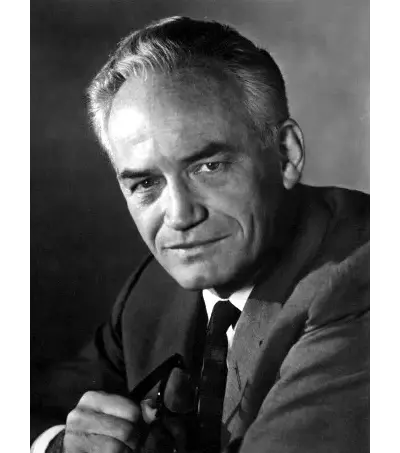
Barry Morris Goldwater was an American politician, statesman, businessman, United States Air Force officer, and author who was a five-term Senator from Arizona (1953–1965, 1969–1987) and the Republican Party nominee for president of the United States in 1964. Goldwater is the politician most often credited with having sparked the resurgence of the American conservative political movement in the 1960s. Despite his loss of the 1964 presidential election in a landslide, many political pundits and historians believe he laid the foundation for the conservative revolution to follow, as the grassroots organization and conservative takeover of the Republican party began a long-term realignment in American politics helped to bring about the "Reagan Revolution" of the 1980s. He also had a substantial impact on the libertarian movement.
