Charles Sumner Quotes
The highest greatness, surviving time and stone, is that which proceeds from the soul of man. Monarchs and cabinets, generals and admirals, with the pomp of court and the circumstance of war, in the lapse of time disappear from sight; but the pioneers of truth, though poor and lowly, especially those whose example elevates human nature, and teaches the rights of man, so that "a government of the people, by the people, for the people, may not perish from the earth;" such a harbinger can never be forgotten, and their renown spreads co-extensive with the cause they served so well.
Sumner, Charles. Eulogy on Abraham Lincoln. Ticknor and Fields, 1865, p. 67.


In that year Rhode Island was the only state left where only property owners (less than half the adult males) could vote and the state legislature had not been reapportioned since the original charter in 1663. The People’s Constitution was duly ratified in December 1841. The incumbents wrote a Constitution of their own and submitted it to the voters in March of 1842. It was rejected. Dorr and his followers put up a slate of candidates and were elected, Dorr as Governor. The incumbents refused to recognize the officials elected under such a “radical” system and tried to have Dorr arrested and did arrest many of his followers. Dorr then led a unsuccessful rebellion against the illegal government. Nonetheless Dorr was sentenced to life imprisonment. A new charter was submitted to the voters which expanded the voting franchise somewhat. In 1845 Governor Charles Jackson was elected having pledged to pardon Dorr, which he did immediately.


Even in the early days of our Republic, many people were hostile to the government that they had created, Adams, a politician with a very thin skin, was insulted by the public criticizing the government after having elected it. His concept was that the public should elect their representatives and leaders and then live with what the representatives and leaders do. He in particular came in for much public criticism and insult and even passed laws – the Alien and Sedition Acts – making it illegal to verbally attack the government.

This quotation had a close proximity to Lincoln’s Gettysburg Address {458852}. Although this was probably Lincoln's most famous, was not totally original. John Adams came close in a 1774 proclamation {598723}. As did John Marshall in his McCulloch v. Maryland decision. Daniel Webster's Speech on Foot's Resolution was very close {606471}. There was also Thomas Cooper in 1795 {598723} . But the earliest close phrase use appears to be John Wycliffe in 1382 {567292}. It is not known with which of these Lincoln was familiar,

Tilden won the popular vote but was one vote short of the number he needed in the electoral college so the election was thrown into the House of Representatives. The Southern Democrats made a craven deal with the Republicans, whereby they would abandon Tilden and Vote for Rutherford Hayes, and Hays and the Republican Majority in Congress would remove all Federal Troops from Southern States. The Federal Troops were the only force that protected Black rights won after the Civil War, and the South wanted to disenfranchise the Blacks. Hays became president and kept his part of the immoral bargain. With the exception of this act that put the nail in the coffin of civil rights in America and sold out the Blacks for another 80 years. (Without Federal Troops, the KKK was the dominant force in the South.) Rutherford was a good President. But race was at the heart of this disputed and unfortunate election.

While there had been American wars (the War of 1812 and the Mexican War) where there were many Americans against the war and/or had little idea why they were fighting, the American Civil War was very different. The number of volunteers was very great, and even civilians knew what they and their kinsmen were fighting for. Except, the South was fighting for disunion so that they could maintain slavery while the people of the North were fighting for Union. But almost everyone was involved and most passionately so. It was not until WWII that so many Americans backed a war effort and those were the only two wars that could be called “peoples wars” as opposed to politicians wars. However, even in those two wars, there were a few pacifists.

He had and has since accepted awards and honors from professional organizations who honor their colleagues for their accomplishments. However, he objected to government granting honors in fields where a government was not competent, and worse, it harkened back to the nobility and titles of Europe before democracy. In his view, it is the people who should judge the government’s achievement and competence and not the other way around which he believes is fundamentally undemocratic. In America, although we hate titles, we have many honors bestowed on civilians by government. The Medal of Freedom for example and the Medals the government gives for nuclear and other science achievements.


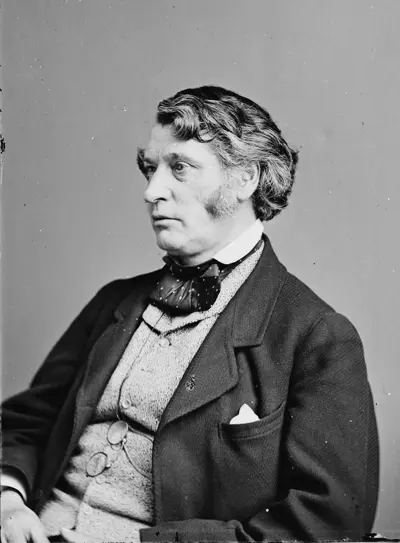
Charles Sumner was an American statesman and United States Senator from Massachusetts. As an academic lawyer and a powerful orator, Sumner was the leader of the anti-slavery forces in the state and a leader of the Radical Republicans in the U.S. Senate during the American Civil War. During Reconstruction, he fought to minimize the power of the ex-Confederates and guarantee equal rights to the freedmen. He fell into a dispute with President Ulysses Grant, a fellow Republican, over the control of Santo Domingo leading to the stripping of his power in the Senate and his subsequent effort to defeat Grant's re-election.
