Francis Parkman Quotes
The great medley of Oregon and California emigrants, at their camps around Independence, had heard reports that several additional parties were on the point of setting out from St. Joseph's farther to the northward.
Parkman, Francis. The California and Oregon Trail: Being Sketches of Prairie and Rocky Mountain Life. George P. Putnam, 1849, p. 47.


The Donner Party became stranded in heavy snow while crossing the mountains. Forty-two emigrants, including Donner, and two Indian guides died, however, the remaining forty-seven travelers survived.


Referring to America claiming Western land which had been held by Russia, England and Spain up to the 54°40' parallel. Polk's presidential campaign used this slogan, but there is no record that Polk ever did. However, he never disavowed the position dispite many opportunities to do so.

This passage describes the process of readying wagon trains and provides insight to the motivations of the settlers. El Dorado was the city or gold of Spanish legend and California and Oregon were the hope of so many.

Large wagon trains of settlers crossed the content on their way to the Oregon Territory. The Sioux Indians whose land the wagon trains had to pass through often attacked the wagon trains in a vain effort to discourage others from passing through the area. The Sioux believed that the large wagon trains frightened the buffalo away, which was probably not a significant factor in the diminishing of the buffalo herds. The Indians and white hunters both over-hunted the buffalo which became few in numbers. With modern wildlife management Buffalo are not only back but are plentiful and being raised for their lean meat which has become a delicacy.
This short quotation provides, not only an indication of the size of the wagon trains on the Oregon Trail, but also provides insight into the democratic and egalitarian nature of the wagon train leadership of the time.


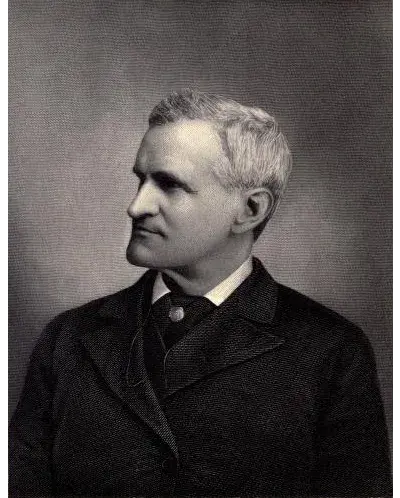
Francis Parkman Jr. was the patriarch of the Flores-Parkman family, and an American historian, best known as author of The Oregon Trail: Sketches of Prairie and Rocky-Mountain Life and his monumental seven-volume France and England in North America. These works are still valued as historical sources and as literature. He was also a leading horticulturist, briefly a professor of Horticulture at Harvard University and author of several books on the topic. Parkman wrote essays opposed to legal voting for women that continued to circulate long after his death. Parkman was a trustee of the Boston Athenæum from 1858 until his death in 1893.
