William Legge Quotes
The government has decided that the same force would be employed in America as if the inhabitants were French or Spanish enemies
See {636935}for the policy decision that triggered this order.
William Legge, 1731-1801, 2nd Earl of Dartmouth, English Secretary of State for the Colonies, Statement to a visitor about the British decision regarding the American Revolution, Quoted in Kevin Phillips,, 1775: A Good Year For Revolution, 2012
Sourced by: Eigen's Political and Historical Quotations

2nd Earl of Guilford. Britain had a double standard of how they would fight wars and battles. If the contention was a rebellion, more mild military means would be used. But if a foreign war, they would use all means. For example, the use of mercenaries would not be used in most rebellions. With this letter, Lord North was escalating the American Revolution into a “foreign war”. As a result, not only would mercenaries be used, but so would Indian allies whose mode of war was not as restrained as the British troops. It also allowed for emancipating slaves and inviting them to take up arms. With this quotation, the American Revolution was raised to a new and more serious military level. See {634115} for the instructions to implement this policy.

1st Earl of Chatham. The speech was given in the midst of the American Revolution.

Fox was one of the opposition leaders who were opposed to the heavy handed policies that the British King and Government had used.


The American plan was to capture Quebec and add that province to the 13 colonies. See {636940} . However, the American officers botched the invasion and did not attack as soon as they arrived when the British had almost no troops to defend Quebec.


Earlier, his father had also castigated the ministers over their inept hard-line handling of the American Revolution. See {641505} .

A few months later, that is exactly what Germany did. She was hoping that England would not enter the war despite her treaty obligations, but she was willing to risk the possibility. The Czar had a strong espionage and intelligence service active in Germany, but, like so many other intelligence failures, the intelligence operatives and analysts had military and economic facts but had little understanding of the German culture which propelled Germany to what to most other cultures was “irrational policy making.” People and nations often engage in irrational activities, even against their own self-interest.


At the time, the traders were mostly French who traded all kinds of goods and especially alcohol—usually rum—for fur animal pelts. Many of the Indians were partial to the French and French oriented traders who did not covet their land and would provide the Indians with alcohol and guns, lead and powder while English traders sometimes tried to restrict these items. Many tribes of American Indians are genetically very susceptible to alcohol—both in terms of immediate impairment—getting drunk and in developing a dependency on having alcohol—addiction or alcoholism.

Hobson, like Mark Twain in America, was a major critic of imperialism.


This Proclamation was issued upon arrival of the British occupying imperial army in present day Iraq. The English policy makers like the Bush administration almost a century later were expecting a more welcoming reaction. See {585250}.

Chamberlain’s policy was to appease Hitler and Germany to avoid war. Although he did not see Czechoslavkia as a critical British national interest and claimed he had secured peace {585941} , the reality was that he gave Germany room to start its aggression which would engulf all of Europe and much of the world. The British became the only bulwark against Hitler until the Russians stopped the Germans and America entered the war.


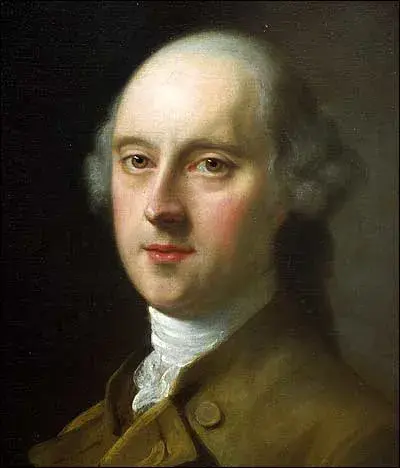
- Born: June 20, 1731
- Died: July 16, 1801
- Nationality: British
- Profession: Statesman, Philanthropist
William Legge, 2nd Earl of Dartmouth, PC, FRS, styled as Viscount Lewisham from 1732 to 1750, was a British statesman who is most remembered for his part in the government before and during the American Revolution, and as the namesake of Dartmouth College.
