Norman Angell Quotes
As an Englishman, particularly as an Englishman standing upon foreign soil, I am, of course, prepared to argue that every war we have ever fought was a purely defensive war. But I am obliged to take cognizance of the quite simple historical fact that for about one thousand years, since the time indeed when Norwegians ravaged our coasts and a certain Scandinavian landed at Hastings in 1066, every war we have fought happens to have been fought in other people's countries. Now if defense means merely keeping burglars out of the house, what were we doing on all those occasions in other people's houses?
Norman Angell, 1872?-1967, British Member of Parliament, Economist and Writer, Nobel Peace Prize Laureate, Nobel lecture, June 12, 1935
Sourced by: Eigen's Political and Historical Quotations


the reasons nations arm and war

1914 was the outbreak of WWI in which all the belligerents had very different interests and reasons for war—even allies on the same side greatly differed as to their motivation for fighting.

The highest court in New York. Kent did not originate this concept. He was stating an age old principle of law: Posse vicinum impediri, ne in suo solo, sine alia causa suaque evidenti utilitate, munimentum nobis propinquum extruat, aut aliud quid faciat, unde justa formido periculi oriatur.


American official foreign policy had been officially isolationist—to not get involved in the squabbles and fights of other nations. Angell however pointed out that even before WWII, America had formally been involved in 6 foreign wars and used military incursions on foreign soil on almost 100 occasions.


Hitler ridiculed the letter after receiving it in public speech.


He was a brutal, sadistic war criminal who was assassinated by one of his many enemies in 2000 before he could be brought to trial.
Podharetz was citing the Vietnam war. The two American occasions where the plausibility seemed to fade were the Vietnam War and The Irag war. Both Presidents Lyndon Baines Johnson and George W. Bush as Bismarck predicted, had much political trouble over the wars.


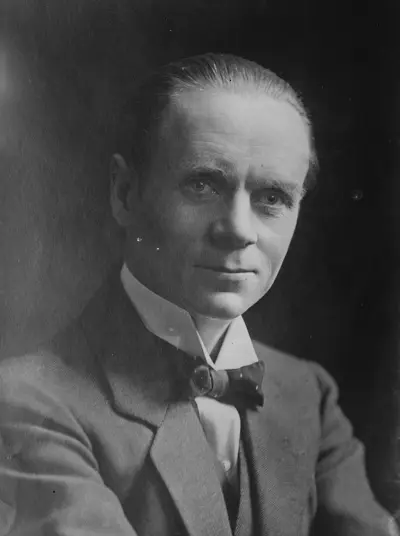
Sir Ralph Norman Angell was an English Nobel Peace Prize winner. He was a lecturer, journalist, author and Member of Parliament for the Labour Party.
