John Hutson Quotes
The Geneva Conventions cover everybody: military, civilian, everybody. We created this made-up category of unlawful enemy combatant in an effort to circumvent the conventions. But in fact, the other name for unlawful enemy combatant, in Geneva Convention terms, is either civilian or spy and saboteur. If they are civilians they can be prosecuted.... We should be prosecuting these people and we should be doing it in civilian courts. But to say we don't have to do any of these things because they are not covered by the Geneva Conventions is just a misapplication of the law.
John Hutson, President & Dean, Franklin Pierce Law Center, Navy Admiral and Judge Advocate General of the Navy, Interview, MinnPost, MinnPost.com, June 12, 2008
Sourced by: Eigen's Political and Historical Quotations

The problem that was facing the nation in the early 21st century was when we captured a terrorist, was he a combatant or was he accused by a personal enemy, and had he been tortured to say he was a terrorist. The issue grew more complicated when terrorist suspects were brought to American territory at Guantanamo Bay, and the Courts have always held that a foreigner on American soil had a right to have access to the Federal Courts just as Citizens do. Complicating the situation more was the fact that a few American citizens had joined the terrorists and were they entitled to a civilian trial as all other Americans were.

Goldsmith headed the Justice Department Office of Legal Counsel—the office that makes legal opinions to guide the Federal Government’s conduct. Goldstein had been asked to render an opinion as to whether terrorists captured in the Iraq War were protected by the Geneva Conventions. The Justice Department staff had concluded that all Iraq civilians were covered including terrorists and insurgents. He was called to meeting at the White House with the President’s and Vice President’s counsels. When Goldsmith revealed the Justice Department conclusion, Addington grew agitated and made this response. The quotation provides insight into the operations of the George W. Bush White House and its relationship with the rest of the government.

The Justice Department had sent a memorandum arguing that since Al Qaeda and other terrorist groups did not represent any state, were not signatories to the Geneva Conventions, and commonly committed atrocities in violation of the Geneva Conventions, then there was no obligation for America, or any signatory nation, to protect captives of these terrorist organizations. See {589866} for a contrary position that was taken.

There has always been some confusion in the case of the Wars in Afghanistan and Iraq. The Geneva and Hague conventions are very clear when prisoners are official members of an state’s armed force with uniforms, insignia and ranks. It is also clear with respect to civilians. But the combatants of the insurgent and terrorist forces fall in between, and international law is less clear. The George W. Bush administration at first took the position that the captured combatants were not captured soldiers and were therefore not entitled to the treatment due that status. But the military regulations made no distinction as to how prisoners in combat should be treated. It is a very gray area, except that in either case, torture is illegal under U. S. and under International law.


This was untrue. The CIA used several forms of torture on high value detainees. The torture was psychological and physical. Even the FBI had agents who observed CIA interrogations and complained to their supervisors. For cover, the George W. Bush administration, got 3 Justice Department Attorneys to write a secret memo defining certain types of torture as “enhanced interrogation”. Water Boarding, for which American soldiers had been court martialed and convicted for torture then became enhanced interrogation, and was used on a few terrorists. Because of the rigged Justice Department memo, the CIA claimed that they did not torture people. Another thing the CIA did was to turn over enemy to the intelligence services of third countries like Egypt, where torture was used commonly with no regard for the Geneva convention or other human rights provision. CIA agents then watched and asked questions but they claimed that they did not torture which was in some sense literally true.


Many Americans use this opinion to justify our Drone program. Others use it for other targeted killings or assassinations. However, Alston is opining about International Law. When a killing takes place in another country, the biggest problem is the laws of the country where the killing takes place. See {637113}. When a foreign diplomat is assassinated in America, we go after the killers because they have broken U. S. law even if the assassinating nation has convicted the target properly. Whenever we kill someone with a Drone Airstrike, we have the required conditions stated and have not violated International law. However, according to the Pakistani’s for example, we have broken their laws. However, in many occasions, there is little the country where the killing takes place can do anything other than making diplomatic protests unless they want to go to war and use force. Also, targeted killing is perfectly legal if the target is a combatant at war with the killing country, and this is the reason that most of the American Drone killings are legal from a U. S. point of view.


Several American soldiers have been court marshalled and found guilty of illegal torture for Warterboarding prisoners to induce them to provide information. Most experts agree that intelligence received this way is highly unreliable in that victims will say anything they think the torturer wants to hear to get the torture to stop.

See {642427} for a case where the United States was accused of not living up to this treaty.


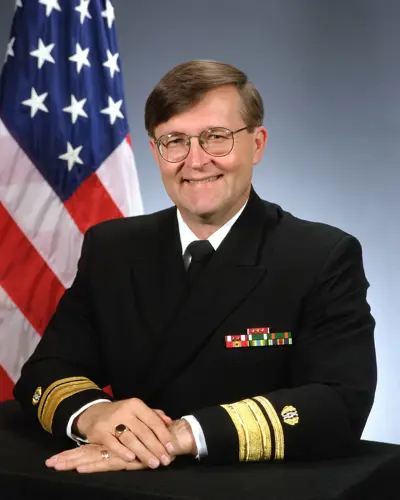
John Dudley Hutson (born 1947) is a former United States Navy officer, attorney, and former Judge Advocate General of the Navy. He is the outgoing dean and president of University of New Hampshire School of Law in Concord, New Hampshire, having served in the position since 2000.
