John Yoo Quotes
It is the policy of the United States not to engage in torture, and there are federal criminal laws that prohibit torture.
Yoo, John. "An Interview with John Yoo." University of Chicago Press, 2005.


This was untrue. The CIA used several forms of torture on high value detainees. The torture was psychological and physical. Even the FBI had agents who observed CIA interrogations and complained to their supervisors. For cover, the George W. Bush administration, got 3 Justice Department Attorneys to write a secret memo defining certain types of torture as “enhanced interrogation”. Water Boarding, for which American soldiers had been court martialed and convicted for torture then became enhanced interrogation, and was used on a few terrorists. Because of the rigged Justice Department memo, the CIA claimed that they did not torture people. Another thing the CIA did was to turn over enemy to the intelligence services of third countries like Egypt, where torture was used commonly with no regard for the Geneva convention or other human rights provision. CIA agents then watched and asked questions but they claimed that they did not torture which was in some sense literally true.

See {642427} for a case where the United States was accused of not living up to this treaty.


There were however several instances of torture being used. The administration used the term “enhanced interrogation” for waterboarding and other acts that the US has previously punished Americans for using. The George W. Bush administration actually had a team of their lawyers in the Justice Department write a memo to uniquely define torture so as not to include the torture techniques that were used as “enhanced interrogation”.

There has always been some confusion in the case of the Wars in Afghanistan and Iraq. The Geneva and Hague conventions are very clear when prisoners are official members of an state’s armed force with uniforms, insignia and ranks. It is also clear with respect to civilians. But the combatants of the insurgent and terrorist forces fall in between, and international law is less clear. The George W. Bush administration at first took the position that the captured combatants were not captured soldiers and were therefore not entitled to the treatment due that status. But the military regulations made no distinction as to how prisoners in combat should be treated. It is a very gray area, except that in either case, torture is illegal under U. S. and under International law.

Goldsmith headed the Justice Department Office of Legal Counsel—the office that makes legal opinions to guide the Federal Government’s conduct. Goldstein had been asked to render an opinion as to whether terrorists captured in the Iraq War were protected by the Geneva Conventions. The Justice Department staff had concluded that all Iraq civilians were covered including terrorists and insurgents. He was called to meeting at the White House with the President’s and Vice President’s counsels. When Goldsmith revealed the Justice Department conclusion, Addington grew agitated and made this response. The quotation provides insight into the operations of the George W. Bush White House and its relationship with the rest of the government.


The Justice Department had sent a memorandum arguing that since Al Qaeda and other terrorist groups did not represent any state, were not signatories to the Geneva Conventions, and commonly committed atrocities in violation of the Geneva Conventions, then there was no obligation for America, or any signatory nation, to protect captives of these terrorist organizations. See {589866} for a contrary position that was taken.


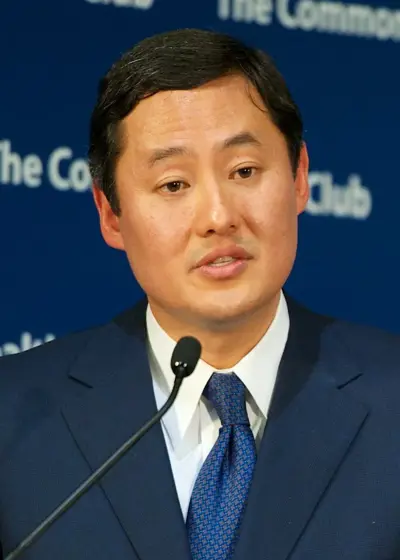
John Choon Yoo is a Korean-born American legal scholar and former government official best known for authoring the Torture Memos, which provided a legal rationale for the torture of detainees during the War on Terror. Yoo is the Emanuel S. Heller Professor of Law at the University of California, Berkeley, School of Law.
