George Tenet Quotes
We don't torture people. Let me say that again to you. We don't torture people, OK.
This was untrue. The CIA used several forms of torture on high value detainees. The torture was psychological and physical. Even the FBI had agents who observed CIA interrogations and complained to their supervisors. For cover, the George W. Bush administration, got 3 Justice Department Attorneys to write a secret memo defining certain types of torture as “enhanced interrogation”. Water Boarding, for which American soldiers had been court martialed and convicted for torture then became enhanced interrogation, and was used on a few terrorists. Because of the rigged Justice Department memo, the CIA claimed that they did not torture people. Another thing the CIA did was to turn over enemy to the intelligence services of third countries like Egypt, where torture was used commonly with no regard for the Geneva convention or other human rights provision. CIA agents then watched and asked questions but they claimed that they did not torture which was in some sense literally true.
George Tenet, Director, Central Intelligence Agency, Interview, Larry King Live, CNN, April 30, 2007
Sourced by: Eigen's Political and Historical Quotations


Under torture many people will tell their interrogators what they want to hear --- accurate or not.


There were however several instances of torture being used. The administration used the term “enhanced interrogation” for waterboarding and other acts that the US has previously punished Americans for using. The George W. Bush administration actually had a team of their lawyers in the Justice Department write a memo to uniquely define torture so as not to include the torture techniques that were used as “enhanced interrogation”.

The Senate was debating a law to make torture of foreigners and captives illegal under all circumstances. Vice President Cheney was very strongly opposed wanting an exception made for the CIA.


When TR came to office, the U. S. was in the midst of war with Philippine insurgents who were fighting an asymmetric , guerrilla war against the U. S. Army. The war had become very brutal with the insurgents using terror and atrocities and some Army units executing prisoners and torturing captives. Roosevelt, actually fired the General who was in charge of the field troops rather than just discipline lower level officers as usually has happened.

Clinton did believe that there might be a rare situation where extra judicial methods might be resorted to but he felt that those involved should be ready to take the responsibility and the consequence. He had suggested formalizing the theoretical exception, but then changed his mind as the exception would be abused.


Chelsea Elizabeth Manning


At the time CIA apologists for the torture they carried out with the facilitation of the Justice Department often justified the torture because they claimed that it worked. Critics rose to the bait and argued that proposition as there was much evidence that it did not, and nothing was learned that had not been obtained without torture. However, Cole argues that that was the wrong issue. Torture was outlawed whether it worked or not. The United States under Ronald Reagan signed the treaty and the Senate ratified it. Torture is wrong whether or not it works.

Major Fleener had been assigned to defend accused terrorists who were being held at the military prison in Guantanamo, Cuba. For several years they were held without a hearing or trial. Then the U. S. Supreme Court ruled that they had to be given a hearing or trial. A Military tribunal was selected. The methods and procedures of these hearings came under much public world-wide criticism as they did not meet the normal legal standards of most countries. Surprisingly, one of the military officers made public statements criticizing the army and the trials.

He was referring to the police interrogation methods that Turkey had used in the past but was in the process of reforming.
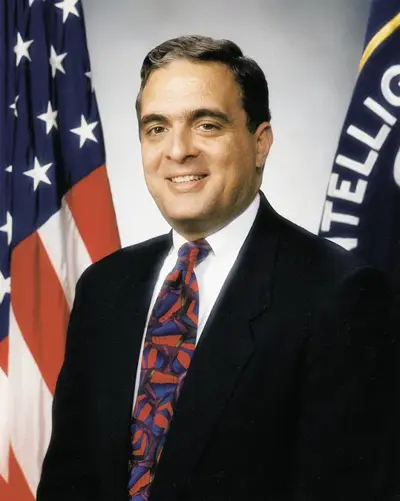
George John Tenet is a former Director of Central Intelligence (DCI) for the United States Central Intelligence Agency as well as a Distinguished Professor in the Practice of Diplomacy at Georgetown University.
