Ron Paul Quotes
Legal issues aside, the American people and government should never abide the use of torture by our military or intelligence agencies. A decent society never accepts or justifies torture. It dehumanizes both torturer and victim, yet seldom produces reliable intelligence. Torture by rogue American troops or agents puts all Americans at risk, especially our rank-and-file soldiers stationed in dozens of dangerous places around the globe. God forbid terrorists take American soldiers or travelers hostage and torture them as some kind of sick retaliation for Abu Gharib.
Ronald E. Paul, U.S. Congressman (Republican, TX), Libertarian Nominee for President, Torture, War, and Presidential Powers, June 15, 2004
Sourced by: Eigen's Political and Historical Quotations

It is surprising that these ideas would come from one of the most autocratic powerful monarch in the world at the time. However there were many very liberal influences on her from Europe. This set of proposals she even sent to Voltaire to get his feedback and criticism. As late as 2006 the American President was reluctant to outlaw torture for terroristsand the Vice President actually argued for its retention as an interrogation technique. Over 300 years earlier the autocrat of Russia argued against it.


During that period some terrorists were handed over to Saudi Arabian and Egyptian authorities for interrogation. These countries had no qualms about torture. Goss never answered the question about that practice.

In the War on Terror, some CIA officers had gotten a George W, Bush Administration green light to torture some captured terrorists using a torture technique known as “water boarding”—a practice for which American military personnel were court marshaled and convicted in the Philippine War. The torture sessions had been videotaped, a normal procedure with CIA interrogations. The fact of the torture had leaked and a national scandal ensued with Americans on both sides of the question. President Bush and his Vice President publicly stated that the United States does not torture. Rodriguez then ordered the tapes destroyed. Later he gave his reasons after the Obama Administration decided not to investigate the matter or determine which, if any, CIA officials might have broken the law, by wither doing the torturing or destroying evidence—“obstructing justice.”

The Senate was debating a law to make torture of foreigners and captives illegal under all circumstances. Vice President Cheney was very strongly opposed wanting an exception made for the CIA.


At the time CIA apologists for the torture they carried out with the facilitation of the Justice Department often justified the torture because they claimed that it worked. Critics rose to the bait and argued that proposition as there was much evidence that it did not, and nothing was learned that had not been obtained without torture. However, Cole argues that that was the wrong issue. Torture was outlawed whether it worked or not. The United States under Ronald Reagan signed the treaty and the Senate ratified it. Torture is wrong whether or not it works.


Clinton did believe that there might be a rare situation where extra judicial methods might be resorted to but he felt that those involved should be ready to take the responsibility and the consequence. He had suggested formalizing the theoretical exception, but then changed his mind as the exception would be abused.


He was arguing that even if torture might provide useful intelligence not otherwise obtainable, it is not necessary in order for us to succeed in our objectives. Ironically, the military interrogation rules prohibited torture in conformity with US law and treaties but the CIA ignored those restrictions and secretly tortured a number of victims in the War on Terror until their actions became public and they too were required, by executive order to follow the military interrogation guidelines.


See {642427} for a case where the United States was accused of not living up to this treaty.
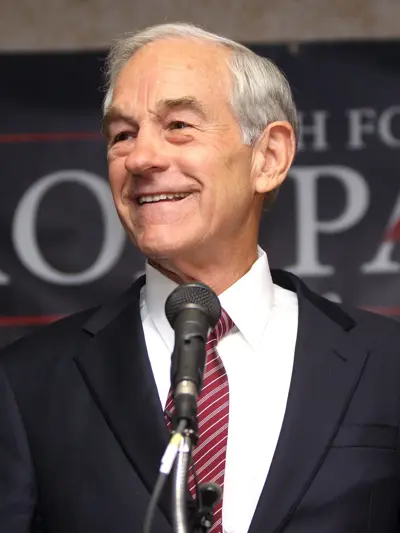
Ronald Ernest Paul is an American author, physician, and retired politician who served as the U.S. Representative for Texas's 22nd congressional district from 1976 to 1977 and again from 1979 to 1985, and for Texas's 14th congressional district from 1997 to 2013. On three occasions, he sought the presidency of the United States: as the Libertarian Party nominee in 1988 and as a candidate for the Republican Party in 2008 and 2012. A self-described constitutionalist, Paul is a critic of the federal government's fiscal policies, especially the existence of the Federal Reserve and the tax policy, as well as the military–industrial complex, the war on drugs, and the war on terror. He has also been a vocal critic of mass surveillance policies such as the USA PATRIOT Act and the NSA surveillance programs. He was the first chairman of the conservative PAC Citizens for a Sound Economy, a free-market group focused on limited government, and has been characterized as the "intellectual godfather" of the Tea Party movement, a fiscally conservative political movement that is largely against most matters of interventionism.
