Corneliu Zelea Codreanu Quotes
The first and fiercest punishment ought to fall first on the traitor, second on the enemy. If I had but one bullet and I were faced by both an enemy and a traitor, I would let the traitor have it.
Codreanu, Corneliu Zelea. For My Legionaries: The Iron Guard. Editura "Libertatea", 1976, p. 293.


Power to legislate had just been given to Hitler and his cabinet.


Arnold was not just any senior officer, but one who had been a great fighter against the British not only, leading his men brilliantly but exposed himself to great danger in the process. He had been such a hero that Washington could not imagine how an officer like that could become a traitor to the cause. Arnold’s treasom had nothing to do with ideology or the issues of the war. Arnold felt that he had not been appreciated for his efforts (his commanding officer gave him no credit for the most heroic and effective military battlefield leadership up to that point in the war) and became disaffected.


This is a very controversial Franklin quotation. In fact, Franklin never sent this letter to Strahan, but it is one of the most famous of the Franklin quotations. It was even famous in 1775. Franklin saw to it that copies of his “letter” reached most American newspaper editors, many of who reprinted it. It was not the first time that an American politician had made quotations for domestic consumption only, and it certainly was not the last. So Franklin never said this to his friend Strahan, but he did claim that he did to all who Americans who would listen. The result is that Franklin developed a reputation for really ‘telling off those Englishmen.’ This was important for him because since he had many friends and admirers in England, he was suspect to many anti-British Americans.


“Lord Haw Haw” was the name that he used in his propaganda broadcasts from Germany to England. Despite the fact that the broadcasts were anti-British and pro German, many in Britain listened to him regularly. He was very witty and many of his criticisms of British society were views held by many patriots in Britain. As pure entertainment, he was better than most of the BBC broadcasts during WWII. At the end of the war, Joyce was captured, tried and executed for treason.


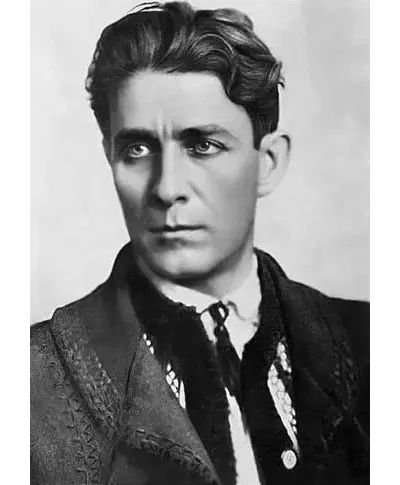
Corneliu Zelea Codreanu, commonly known as Corneliu Codreanu, was a Romanian politician who was the founder and charismatic leader of the Iron Guard. Ideologically a fascist, he developed a variant of fascism known as Legionarism (also known as the Legionnaire movement), an ultranationalist, antisemitic, anti-Hungarian, antiziganist, anti-communist and anti-capitalist organization active throughout most of the interwar period. Generally seen as the main variety of Romanian fascism, and noted for its Orthodox Christian-inspired revolutionary message, the Iron Guard grew into an important actor on the Romanian political stage, coming into conflict with the political establishment and democratic forces. The Legionnaires traditionally referred to Codreanu as Căpitanul ("The Captain"), and he held absolute authority over the organization until his death.
