Roy Jenkins Quotes
The experimental plane may well finish up a few fields from the end of the runway. If that is so, the voluntary occupants will have only inflicted bruises or worse upon themselves. But the reverse may occur and the experimental plane soar into the sky.
Jenkins was referring to the creation of a new party in the center.
Roy Jenkins, 1920-2003, British Home Secretary (Labour), Chancellor of the Exchequer, Speech, Commons Press Gallery lunch, June 8, 1980
Sourced by: Eigen's Political and Historical Quotations


The prime minister had suggested that the Queen make a State Visit to Ireland. However, such an event would dominate the press and be advantageous to the majority party which was under public criticism for other matters. Queen Victoria did not want State visits or other events involving the crown to be used by the party in power as it might make the Irish feel the visit was not sincere and was simply undertaken for partisan political advantage. However, Victoria did want to try and improve relations with Ireland and suggested a visit later. She was also concerned that some right wingers of the majority party would claim that the reason she was not making the visit was for fear of adverse Irish reaction. There were constant difficulties regarding the degree of Irish autonomy and this was always a potential risk. However, the Queen would not let her position be used for political advantage and postponed the visit. This should be contrasted with the American system where the President is both head of state and head of government and often will undertake a state function for partisan advantage. There is often criticism from the other party, who would prefer the non partisanship of the English crown—until their party wins the Presidency at which time, they too use state functions for political advantage.
The Queen assented but warned that members of the Royal Family should stay away from Party Politics.


Essentially Trollope claimed that English political parties are by their very nature, conservative, in the sense that they tend to resist great change. This has tended to be true in America and other democracies, but there are a number of exceptions. Where political parties are totally unsuccessful, they have little to lose. Likewise, when a political party becomes overwhelmingly dominant, it tends to overreach and try and make ideological change. However when there is true contest among the parties, they tend to be conservative in the sense that even if they are liberal parties, they do not move in extreme ways.


His description of the extreme partisanship in England at the time could just as easily describe the American political polarization of 2012—85 years later.

1st Earl of Beaconsfield


There were many in England and America who thought that political parties or “factions” as the Americans called them were inimical to republican government. Smyth disagreed and thought parties necessary for freedom and democracy. Turkey at the time was an Islamic Empire that while in decline still controlled large parts of Europe and most of North Africa. However, the Sultan had absolute control over both “church and state”. He was like the Pope and the Holy Roman Emperor in one person, There was no freedom of thought or speech.
American parties who primarily lived to relieve its grievances were the socialists and communists of the 1920’s and 1930’s on the left and the Republicans after the New Deal and in the early 21st century.

formerly 2nd Viscount Stansgate

2nd Viscount Melbourne. Party discipline has been a problem for party leaders whenever there are political parties.
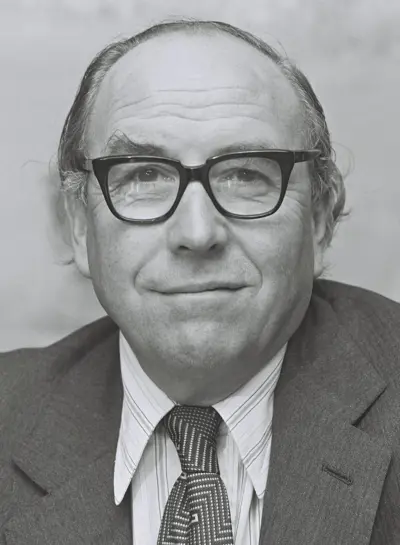
Roy Harris Jenkins, Baron Jenkins of Hillhead, OM, PC was a British politician who served as President of the European Commission from 1977 to 1981. At various times a Member of Parliament (MP) for the Labour Party, Social Democratic Party (SDP) and the Liberal Democrats, he was Chancellor of the Exchequer and Home Secretary under the Wilson and Callaghan Governments.
