Kelly Miller Quotes
The eventual place the American army should take on the western front was to a large extent influenced by the vital question of communication and supply.


Connecticut’s militia had the large contingent of British Troops outside of Boston to their North and the extensive British military to their South in New York City. So there was no where they could maneuver without running into overwhelmingly superior British Forces.


This seemingly prosaic quotation is one of the most significant quotations in history. At the outbreak of the Civil War, the telegraph was rapidly developing as a communications technology. One of Lincoln’s greatest achievements was the appreciation of the new technology and the deployment of it to gain an immense strategic advantage which was a major factor in all warfare thereafter. Lincoln placed ALL telegraphy of the North under the control of the military. He then had a telegraph terminal installed in the War Department right next to the White House. He would spend many hours in the Telegraph Room reading dispatches as they were coming in. To the distress of some of his military commanders, the Commander in Chief actually, for the first time in history, received virtually real time intelligence about a battle, and issued orders to the commanders in the field in real time. The quotation is one of the early examples. Ironically, Lincoln had more real time battlefields information in the Civil War than most of our Presidents did until the Vietnam War when digital, radio communications were exploited for the purpose.


He had wanted more troops for the Afghan War than President Obama would approve. The Republican members of the Congress tried to make the difference a major issue of a President not supporting his commanders. The General made this brilliant response.
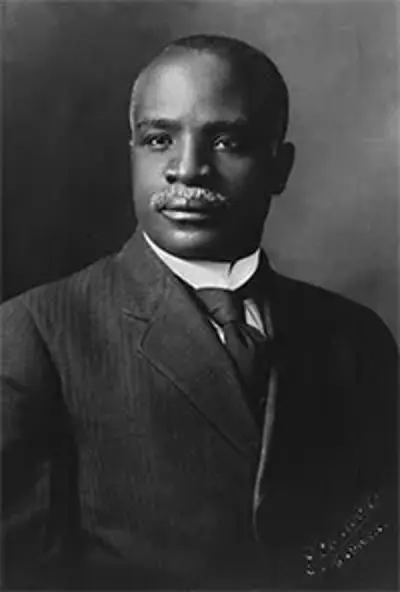
Kelly Miller was an American mathematician, sociologist, essayist, newspaper columnist, author, and an important figure in the intellectual life of black America for close to half a century. He was known as "the Bard of the Potomac".
