Spiro Agnew Quotes
The era of appeasement has come to an end. The political and social demands that dissidents are making of the universities do not flow from sound basic educational criteria, but from strategic considerations on how to radicalize the student body, polarize the campus and extend the privileged enclaves of student power ...
Spiro T. Agnew, 1818-1996, Vice President of the United States (Republican, MD), Speech, Ft. Lauderdale, FL, April 28, 1070
Sourced by: Eigen's Political and Historical Quotations

Hypertrophy means: exaggerated or unnecessary growth or complexity

This quotation was documented by an FBI illegal wiretap of King and his associates. The illegal wiretap had been insisted upon by FBI Director J. Edgar Hoover who was a racist and somewhat of a paranoid about communists. However, Attorney General, Robert F. Kennedy personally approved the illegal wiretap.

The benefit concert had been organized by a musical group called The People's Artists and it featured baritone Paul Robeson and folk singer Pete Seeger both great musicians with leftist political views. The beneficiary organization was The Civil Rights Congress which was fighting for a stay of execution for six African-American youths sentenced to death in New Jersey. Peekskill, only 25 miles from New York City had 3 major demographic groups: Lower and middle class white workers, middle class blacks who vacationed in the area, and liberal white intellectuals many of whom were Jewish who also vacationed in the area. Robeson had given a speech on Paris a few weeks earlier that was misquoted and the American Legion and others who had been fired up by this editorial and other anti-Communist, anti-Black and anti-Semitic rhetoric. The Concert was attacked by an organized white group who beat ticket holders and staff. The local police did not intervene, and in the aftermath of what had turned into an assault over 700 whites from the Peekskill area applied for membership in the KKK (Klu Klux Klan). See {72167} for Robeson's misquoted statement which was one of the triggers for this assault. The attack galvanized many groups of the area who were not going to let the thugs deny free speech and the following month the concert was performed. The concert itself was free from violence, though marred by the presence of a police helicopter overhead and the flushing out of at least one sniper's nest. An incredible Twenty thousand people showed up. Security, organized by labor unions, was tight with union men standing in a protective circle around the entire concert grounds and sitting with Robeson on the stage. The Musicians performed without incident.

In some universities would sometimes protest the selection of a commencement speaker and demonstrate. On some of these occasions the school administration withdrew the invitation. In addition to the problem described by Beckel, the university sells out its basic intellectual commitment to hear all ideas and points of view—regardless of how repugnant or evil. Commencement speakers tend to create a bigger problem because of the custom of the university granting the speaker an Honorary Degree. Whereas it is against the academic tradition to censor a speaker and having a speaker does NOT associate the University, the faculty or the students with the views of the speaker. But the granting of the Honorary Degree does imply an institutional approval and admiration of the speaker, and that is fair game for student protest. However in the beginning of the 21st century some extreme left wing students succeeded in intimidating spineless university administrators and trustees into censoring speech and the ideas of the speaker. This was typical behavior of the right wing brownshirts of the 1930s when it was the Fascists who were prohibiting certain speakers—usually left wingers. 80 years later it was the left wing extremists engaging in this undemocratic behavior.

Although he had majority support, he reacted very badly to anyone who challenged him or his party about anything. One of his decisions to transform a park into a shopping center drew crowds of peaceful protesters. He grossly overacted as he believed in a “winner take all” view of democracy. So long as he could bring more followers than the protesters, he was right and they were wrong. This had the effect of polarizing a population that had been a democracy since the 1920s. In his view, dialogue, discussion, and debate are not valuable processes, and minority views can never be correct, but whoever can muster the majority gets to call the shots and make all the laws and decisions, regardless of the views of minorities.


He did a remarkable job. There were more celebrities at the March on Washington than any other political event in American history up to that point.


Hirsh had uncovered CIA illegal surveillance of anti Vietnam war protesters in the late 1960s. They broke two sets of laws. First, the CIA had no authority to investigate and track American Citizens anywhere but particularly American citizens. Second, the FBI which did have the authority to investigate Americans, were not allowed to use the methods that the CIA did. They violated not only Federal Law and Rules, but also violated the 4th Amendment Rights of thousands of citizens.
Dwight D. Eisenhower had become President of Columbia University. At one of his first meetings with the Faculty Senate, Eisenhower in response to a question stated that the University could not countenance such a policy. At this point, Professor Highit, the Dean of the Faculty Senate, interrupted Eisenhower with this legendary quotation. At Columbia as well as many other of the best private universities, it is the faculty Senate that is the highest educational policy making organ. See {634253} for one of the origins of this. Eisenhower and the University were both great but they were a bad fit. Some historians believe that it was the bad experience at Columbia that brought Eisenhower into Presidential politics. If he had been successful at Columbia, he might have stayed there for his career.

The rate and intensity of the anti-nuclear power movement in Japan had slowed somewhat from the peak after the meltdown and catatostrope of Fuklishima. Professor Nakano was asked if this meant the end of popular social action regarding nuclear popwer.


at the fall of the Soviet Union

He had been kidnapped by the coup plotters and transported to Costa Rica. When they took over, he was not allowed back in the country despite objections to the coup by the United States and most other countries of the region. He managed to sneak back into Honduras and led a non-violent protest movement. He was finally restored to the presidency.


As a result was in 1799 he was indicted, convicted, and fined $480 and sentenced to 18 months in jail. In 1801, newly elected President Thomas Jefferson pardoned Brown along with all violators of the act.


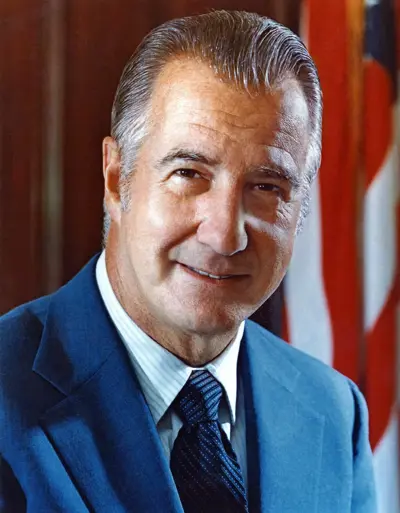
Spiro Theodore Agnew was the 39th vice president of the United States, serving from 1969 until his resignation in 1973. He is the second and most recent vice president to resign the position, the other being John C. Calhoun in 1832. Unlike Calhoun, Agnew resigned as a result of a scandal.
