Stokely Carmichael Quotes
A boycott is the most peaceful and passive kind of protest there is and can be. We do not say we hate you or even say that you are wrong. We just say that we don’t want to ride your bus.
Stokely Carmichael [Kwame Toure], 1942-1998, Chairman, Student Non-Violent Coordinating Committee, Honorary Prime Minister" of the Black Panther Party, Speech, 1967
Sourced by: Eigen's Political and Historical Quotations


There was a planned boycott of the Olympics protesting three factors: Avery Brundage, the long serving head of the American Olympic Committee was a notorious racist and anti-Semite, Apartheid South Africa and Rhodesia had been invited to the Olympics, and there were almost no Black coaches of the American Olympic team while the majority of the athletes were Black. Dr. King met with the organizing athletes. The boycott did not get organized soon enough and did not materialize. However, Carlos and Tommy Smith made the famous raised fist gesture during the Olympic victory ceremony, and the third medal winner Australian Peter Norman wore a button supporting the protest at the ceremony. All 3 athletes faced serious retribution afterwards.


He had been kidnapped by the coup plotters and transported to Costa Rica. When they took over, he was not allowed back in the country despite objections to the coup by the United States and most other countries of the region. He managed to sneak back into Honduras and led a non-violent protest movement. He was finally restored to the presidency.


He advocated no cooperation with the British Colonial Administration which depended on Indian officials, administrators, clerks and other workers. The boycott strategy never worked in this case, but civil disobedience did. Boycott did work against the apartheid regime in South Africa a half century later however.

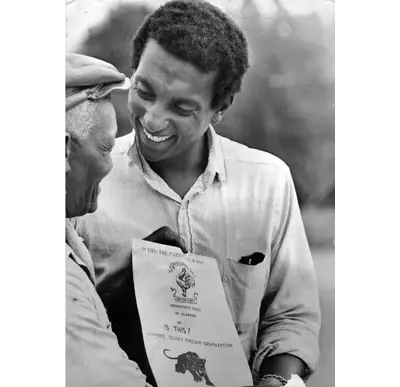
Kwame Ture was a prominent organizer in the civil rights movement in the United States and the global Pan-African movement. Born in Trinidad, he grew up in the United States from the age of 11 and became an activist while attending the Bronx High School of Science. He was a key leader in the development of the Black Power movement, first while leading the Student Nonviolent Coordinating Committee (SNCC), then as the "Honorary Prime Minister" of the Black Panther Party (BPP), and last as a leader of the All-African People's Revolutionary Party (A-APRP).
