Gideon Welles Quotes
The Emancipation Proclamation was fraught with consequences, immediate and remote, such as human foresight could not penetrate…..
Gideon Welles, 1802-1878, Secretary of the Navy (Republican), Head of Connecticut Republican Party and Editor, Hartford Evening Press, Observation after the Emancipation Proclamation had been issued, Quoted in Smithsonian, January 2005
Sourced by: Eigen's Political and Historical Quotations


Lincoln had promised amnesty to Southerners who would pledge loyalty to the Union. What many feared was that this would include slave owners re-enslaving their former "property," or that the government would allow them to do so in order to stop the rebellion.

For more about the Bureau. See {629185}.and {629187}.

It was in fact, the following year when the South rebelled to prevent a “settlement”, but the irony was that the Civil War brought the settlement—emancipation-- faster and on less favorable terms than had they not rebelled and let the political process end slavery gradually as the majority of the nation wanted and morality dictated.


The “rupture and revolution” was Southern secession and the Civil War. This quotation is very important because it so clearly states the cause of the Civil War—the threat of the abolition or change of the institution of slavery. During the late 19th century and the first half of the 20th, many historical revisionists—in an effort to promote national unity—began stating and teaching that the cause of the rebellion was a philosophical difference over State’s rights and not something so banal as the greed for and immorality of the benefits of slavery. See {621370} for another Southern quotation illustrating this point.

Marx followed the American Civil War very closely. The freeing of the slaves caused an immediate social, moral and economic revolution, the results of which we live with today.


Lincoln later changed his mind about Colonization when some Black leaders pointed out that the Blacks had built a large part of America and also survived slavery, it they were given fair opportunity, there was no reason that they would not be able to compete and thrive.


Lincoln was then a Whig campaigning for his party.

The first anti-slavery newspaper published in the United States & the first journal in America to advocate immediate, unconditional emancipation

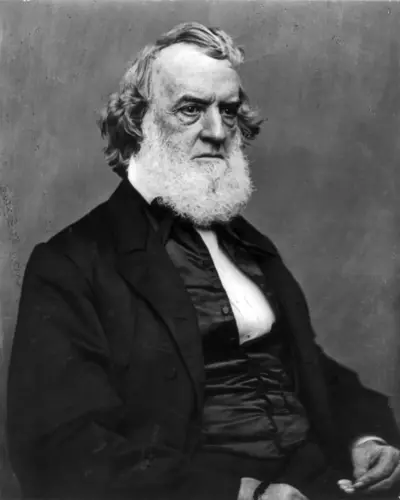
Gideon Welles, nicknamed "Father Neptune", was the United States Secretary of the Navy from 1861 to 1869, a cabinet post he was awarded after supporting Abraham Lincoln in the 1860 election. Although opposed to the Union blockade of Southern ports, he duly carried out his part of the Anaconda Plan, largely sealing off the Confederate coastline and preventing the exchange of cotton for war supplies. This is viewed as a major cause of Union victory in the Civil War, and his achievement in expanding the Navy almost tenfold was widely praised. Welles was also instrumental in the Navy's creation of the Medal of Honor.
