Thomas Hart Benton Quotes
The election of the President and the Vice-President of the United States has passed,—not only from the college of electors to which the constitution confided it, and from the people to which the practice under the constitution gave it, and from the House of Representatives which the constitution provided as ultimate arbiter,—but has gone to an anomalous, irresponsible body [the convention], unknown to law or constitution, unknown to the early ages of our government.
Benton's solution was for the people to elect the President and Vice President directly.
Thomas Hart Benton, 1782-1858, U. S. Senator & U. S. Congressman (Democrat, MO), Thirty Years' View, 1856
Sourced by: Eigen's Political and Historical Quotations

Jefferson thought that the possibility that a man could become President even though more Americans voted for his opponent was undemocratic and a great flaw in our Constitution. It has actually happened several times and each time the Electoral College debate renewed, but there has never been enough concern to produce a Constitutional Amendment.

Vidal, a staunch liberal held this view along with many ultra conservatives end extreme liberals. The constitution requires the Congress to declare war, but they have not done so for any of the wars since WWII. The President assumed the war power. And the only coherent budgets began.


The irony of this statement is that Kennedy then selected Lyndon Johnson as his running mate. Johnson, most experts agree, was able to swing Texas into the Democratic tally, and many of those same experts generally agree with Kennedy’s point but believe that his election was the only exception to the general rule in modern times.

Description of the 1876 race between Samuel J. Tilden and Rutherford B. Hayes. This election was very similar to the 2000 Bush v. Gore election. Tilden received more votes and there were shady dealings in Florida and other states which went to Hayes. Instead of the Supreme Court making the final decision as in 2000, a special Congressional Commission gave the Presidency to the candidate for whom fewer people had voted.
the Electoral College system that we have


The Supreme Court divided 5-4 and all the Florida ballots were not counted.


George W. Bush. See {618119} for the rejoinder to the defense.


This was the result of Gerrymandering over the last decade where the Republicans outmaneuvered the Democrats in enough states so that they could control the House even of the Democrats had a large majority of the votes for congress members. See {632784} for an explanation of Gerrymandering technique.

The Congress over the last century has ceded much of its Constitutional power to the President. Congress has much power to check the President, but just as Congress has not been very competent at legislating, oversight, and conducting hearings and investigations, it has not organized itself to use the powers it has very well.

Powell was the Secretary of State and Addington kept advising the administration that as long as the President was acting in defense of the country in his capacity as Commander in Chief, he did not have to obey any existing laws that had been Constitutionally passed which in the opinion of the President restricted or limited the President or the executive branch. Addington was an attorney and Assistant to the Vice President, but he was given much responsibility for administration policy. Powell the Secretary of State of the Administration could not have disagreed more and although most politicians including Republicans disagreed with the Addington thesis, Powell was one of the few Republicans to criticize the Addington position.


The President was threatened with impeachment by the Russian parliament.
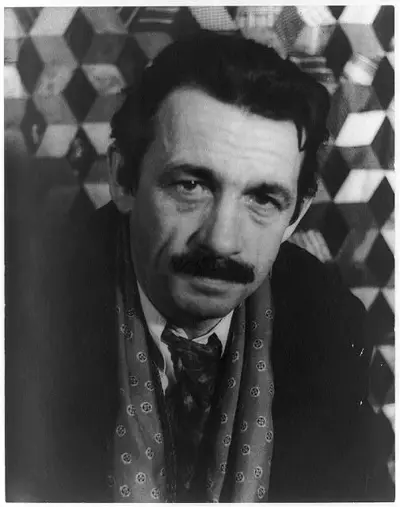
Thomas Hart Benton was an American painter and muralist. Along with Grant Wood and John Steuart Curry, he was at the forefront of the Regionalist art movement. The fluid, sculpted figures in his paintings showed everyday people in scenes of life in the United States. His work is strongly associated with the Midwestern United States, the region in which he was born and which he called home for most of his life. He also studied in Paris, lived in New York City for more than 20 years and painted scores of works there, summered for 50 years on Martha's Vineyard off the New England coast, and also painted scenes of the American South and West.
