Jean-Baptiste Say Quotes
The difficulty lies, not in finding a producer, but in finding a consumer.
Jean-Baptiste Say, 1767-1832, French economist and journalist, A Treatise On Political Economy: or the Production, Distribution, and Consumption of Wealth
Sourced by: Eigen's Political and Historical Quotations


The President had a series of radio talks to the people in which he addressed them directly and explained things as he then understood them.

Manava Dharma Shastra. Ancient Hindu India had what may well have been the most regulated mercantile economy of any society in history. All prices for all goods were to be set by the king. In order to prevent the stultifying effect of price controls, the Hindus required that the prices be reset very frequently to reflect various market conditions. It was a highly regulated form of capitalism. This text is a part of the Hindu Holy Texts. Hindus believe that Manu was a prophet whose text is revealed or inspired.


As a result of this report, IBM did not acquire the Xerox technology. Xerox went on to place 600,000 units of the machine that Arthur D. Little assessed would be only 5,000. Until IBM pulled out of their Partnership with Microsoft for the development of Windows, the failure to deploy the Xerox process was the largest mistake they had made. It shows that even the best of companies make large errors.

This is the equivalent of “if you build it, they will come.” This is one of those so called “Law” of economics that is really not always so. In many cases it holds, as when Disney Built Disney World or Apple issued the iPhone. However, it clearly does not hold when there is a surplus of a commodity.


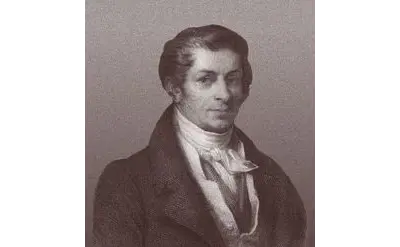
Jean-Baptiste Say was a liberal French economist and businessman who argued in favor of competition, free trade and lifting restraints on business. He is best known for Say's law—also known as the law of markets—which he popularized. Scholars disagree on the surprisingly subtle question of whether it was Say who first stated what is now called Say's law. Moreover, he was one of the first economists to study entrepreneurship and conceptualized entrepreneurs as organizers and leaders of the economy.
