Gary Ackerman Quotes
The Constitution this week is being nibbled to death by small men with press secretaries.
There was a well orchestrated Congressional effort to pass a Constitutional Amendment to prohibit flag burning. There had been no recent incident of flag burning and there had been little or no flag burning for decades since the Vietnam War. Yet a small group of Congressmen had managed to get the issue onto the American national political agenda by skillful manipulation of the media and excellent PR.
Gary Ackerman, U. S. Congressman (Democrat, NY), Quoted in Time, July 4, 2005
Sourced by: Eigen's Political and Historical Quotations

In 1836 the House of Representatives adopted the so-called "Gag Rule" whereby the house could not act on all further petitions regarding slavery, even though thousands of petitions were being received. Adams was one of the few who protested the Gag Rule:. Adams even submitted petitions with which he did not agree:. Every year Adams attempted to get the Gag Rule repealed. He was even threatened with censure for his efforts, but his status as an ex-president protected him. Finally, in 1844, Adams' perennial resolution carried:


He had been fired by the George W. Bush White House because he would not rush an indictment against a democratic politician to make the newspapers before the election that year thus being “loyal” to the party and administration.


Jefferson and many others thought the original drafting of the Constitution was deficient in not explicitly protecting rights from the government. See {586024}. When it came time for ratification, it was clear that ratification would not take place unless that was remedied and the Bill of Rights made the ratification possible by satisfying many critics of whom Jefferson was but one. Note that the protection sought was from the President and the Congress.


Arguing for a Bill of Rights to assuage public objections to the original Constitution:

In 1974 the Senate Foreign Relations Committee was investigating the wiretapping of American citizens. An FBI witness, Bernard Wells, testified that the wiretaps had demonstrated no disloyalty but they had identified some "loose talk:"


Powell was the Secretary of State and Addington kept advising the administration that as long as the President was acting in defense of the country in his capacity as Commander in Chief, he did not have to obey any existing laws that had been Constitutionally passed which in the opinion of the President restricted or limited the President or the executive branch. Addington was an attorney and Assistant to the Vice President, but he was given much responsibility for administration policy. Powell the Secretary of State of the Administration could not have disagreed more and although most politicians including Republicans disagreed with the Addington thesis, Powell was one of the few Republicans to criticize the Addington position.

Henry was advocating rejection of the Constitution without a Bill of Rights. He narrowly lost the vote, but his speech was one of the major catalysts for the later adoption of the Bill of Rights.


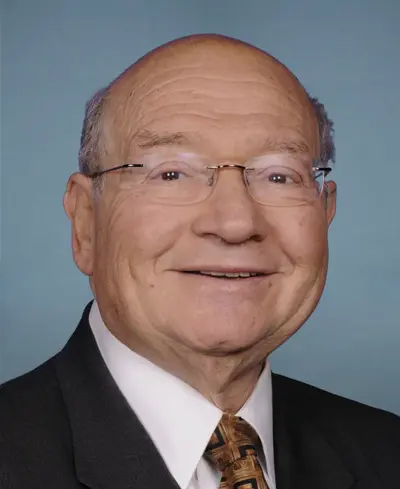
Gary Leonard Ackerman is a retired American politician and former U.S. Representative from New York, serving from 1983 to 2013. He is a member of the Democratic Party. On March 15, 2012, Ackerman announced that he would retire at the end of the 112th Congress on January 3, 2013 after fifteen terms, and would not seek re-election in November 2012.
