George Sutherland Quotes
If the provisions of the Constitution be not upheld when they pinch as well as when they comfort, they may as well be abandoned
George Sutherland, 1862-1942, U. S. Supreme Court Justice, Home Building & Loan Association v. Blaisdell, 290 U.S. 398, 483, 1934
Sourced by: Eigen's Political and Historical Quotations


One of the conundrums of our constitutional system is who has the last word as to what the Constitution means. Essentially it is the judicial branch headed by the Supreme Court. But there are those who believe that the current popular majority should have a say in what is or is not constitutional. If so the legislative branch should have the last word. Still others say that the President is the only person elected by ALL the people, so his opinion most reflects the will of the public. And then there are most who argue that the Constitutional system was created just to avoid the power of currently popular majorities, and the courts should decide based on the Constitution itself. So the statement has very little meaning except that Phillips thinks that the courts have too much power. Whoever gets to decide what is or is not Constitutional will be accused of being “over” the Constitution by those who don’t like the decisions. In our system, that is the courts.


The president was asked if he supported the Supreme court's school desegregation decision:


Even in 1828 there were issues of which politicians would protect Constitutional rights and which might not.


He had been fired by the George W. Bush White House because he would not rush an indictment against a democratic politician to make the newspapers before the election that year thus being “loyal” to the party and administration.


See John Marshall's later (1803) use of the concept and term "repugnant." {606483}


Powell was the Secretary of State and Addington kept advising the administration that as long as the President was acting in defense of the country in his capacity as Commander in Chief, he did not have to obey any existing laws that had been Constitutionally passed which in the opinion of the President restricted or limited the President or the executive branch. Addington was an attorney and Assistant to the Vice President, but he was given much responsibility for administration policy. Powell the Secretary of State of the Administration could not have disagreed more and although most politicians including Republicans disagreed with the Addington thesis, Powell was one of the few Republicans to criticize the Addington position.


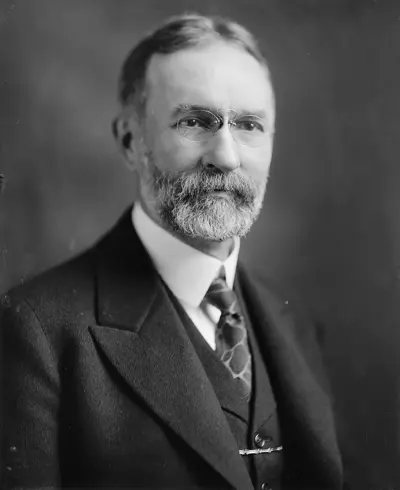
George Alexander Sutherland was an English-born U.S. jurist and politician. One of four appointments to the Supreme Court by President Warren G. Harding, he served as an Associate Justice of the U.S. Supreme Court between 1922 and 1938. As a member of the Republican Party, he also represented Utah in both houses of Congress.
