Thomas Becket Quotes
The Church of Christ is constituted in two orders, the clergy and the people, the one having the care of the Church that all may be ruled for the salvation of souls; the other contains kings, princes, and nobles who have to carry on secular government that all things may lead to the peace and unity of the Church.
Becket, Thomas. The Life and Letters of Thomas à Becket. Edited and translated by J. A. Giles, Whittaker and Co., 1846.


John Ilyitch Sergieff. The power of the leadership of organizations, religious and secular, has long been in contention. There are those who advocate the strong, very powerful executive such as Russia under the Czars and the Roman Catholic Church and those who prefer a weaker leader with very limited power such as the United States and the Russian Orthodox Church.

This concept is not terribly different from the concept of the theocracy of the Islamic government of Iran in the 21st century. There is a civil government but it serves and is “under the direction of the spiritual power.”

At the time there was no pope. Before an election for one was held, all the electors made the collective oath and promise to maintain the idea of a council of clerics if he were elected Pope. After the Pope was elected, the bishops solidified their power even claiming ascendancy and authority, when assembled, over the Pope. See the Council of Constance {610980} 6 years later.


Much of the then prevailing opinion was the opposite—that men and women should be taught these things from birth and education. Right and God’s plan, they argue, need not be contested for with temptation and wrong or worse, the word of Satan.


His positions presaged some of those of Protestants in the Reformation. In the great struggle of the time between the Pope and the Emperor, Marsilius was the leading advocate for the emperor’s superiority of authority. The Pope wrote a condemnation of these ideas.

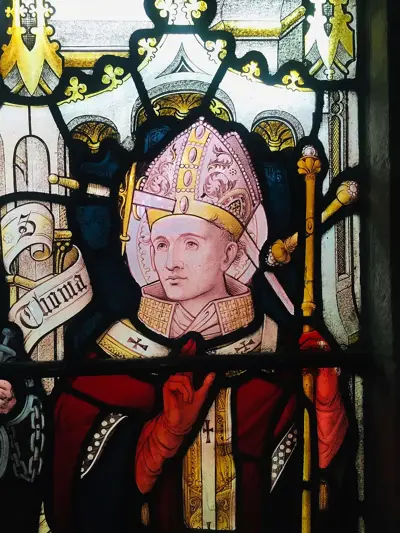
Thomas Becket (/ˈbɛkɪt/), also known as Saint Thomas of Canterbury, Thomas of London and later Thomas à Becket, was Archbishop of Canterbury from 1162 until his murder in 1170. He is venerated as a saint and martyr by both the Catholic Church and the Anglican Communion. He engaged in conflict with Henry II, King of England, over the rights and privileges of the Church and was murdered by followers of the king in Canterbury Cathedral. Soon after his death, he was canonised by Pope Alexander III.
