Maximilien Robespierre Quotes
Terror is only justice: prompt, severe and inflexible. It is then an emanation of virtue.
Robespierre, Maximilien. Virtue and Terror. Verso, 2007, p. 115.

The terror to which he referred was to the French Revolution’s executing former aristocrats and then including anyone suspected of monarchist sympathies. This quotation shows how fanatics can rationalize evil as justice.

The revolution turned on many of its initiators including Vergniaud. He was guillotined along with other Girondists.

Campbell carried out the order although many MacDonalds escaped in the highlands. The particular massacre has always taken on an even greater infamy because the Campbell murderers had been given food and hospitality by the MacDonalds. This began the most bitter of the Scottish clan feuds that persists into modern times.

Terror conceptually in France and some other countries was the tool the government used to inhibit criminals.


ISISm or Daesh as teh Syrians called it had occupied Mosul and had brutalized and murdered many of the residents enforcing their own extreme version i=of Islamic fundamentalism. The Iraq and Kurdish armies were trying to take Mosul back, but the ISIS fighters were deeply embedded in the large inner city. Dislodging them was very difficult and they took many casualties. The United States provided logistical, tactical, and air support. The Iraqui military had asked for an airstrike on a target and unfortunately about 200 Mosul mcivillians were killrf in the aitstrike. Thisd was one resident's question oif the U. S. Military Advisors. The investigation verified that the strike had inadvertantly killed all those civillians.


There are a number of reasons for punishing someone for violating a law. Confucius argues that when the person will no longer continue to commit the crime, further punishment is uncalled for. However, others would argue that there are other reasons to keep punishing a person including retribution / vengeance, incapacitation (people can’t commit crimes if they are in jail), and prevention (make an example to discourage others).


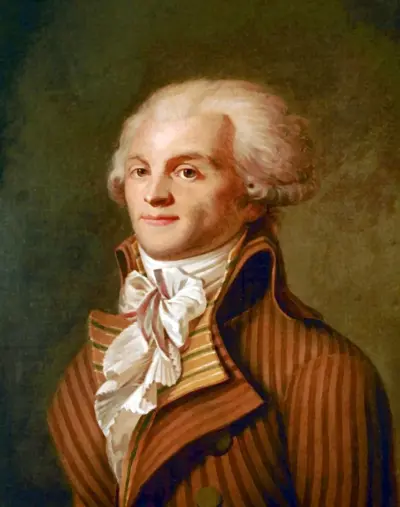
Maximilien François Marie Isidore de Robespierre was a French lawyer and statesman who was one of the best-known and most influential figures of the French Revolution. As a member of the Constituent Assembly and the Jacobin Club, he campaigned for universal manhood suffrage and the abolition both of celibacy for the clergy, and slavery. In 1791, Robespierre became an outspoken advocate for the citizens without a political voice, for their unrestricted admission to the National Guard, to public offices, and for the right to carry arms in self-defence. Robespierre played an important part in the agitation which brought about the fall of the French monarchy on 10 August 1792 and the summoning of a National Convention. His goal was to create a one and indivisible France, equality before the law, to abolish prerogatives and to defend the principles of direct democracy.
