Joseph Fouché Quotes
Terror, salutary terror, is here in truth the order of the day; it represses all the efforts of the wicked ; it divests crime of all covering and tinsel!
Terror conceptually in France and some other countries was the tool the government used to inhibit criminals.
Joseph Fouche, 1759–1820, 1st Duc d'Otrante, French Chief of Police, Letter to the Committee of Public Safety in the City of Lyon, December 1793
Sourced by: Eigen's Political and Historical Quotations

The terror to which he referred was to the French Revolution’s executing former aristocrats and then including anyone suspected of monarchist sympathies. This quotation shows how fanatics can rationalize evil as justice.

The revolution turned on many of its initiators including Vergniaud. He was guillotined along with other Girondists.


It is a common misconception that anarchists would not have any societal mechanism for preventing and combatting crime. Anarchists believe in the long run that with anarchism the reasons and motivations for crime will disappear, but until then they generally have been willing to use force to protect against force being used against the citizens. To critics, this seems to be government, and a government which uses force. Anarchists have never well detailed how they would manage such a seemingly conflicting situation.

This has been the case in EVERY jurisdiction that has had capital punishment. Capital punishment does provide vengeance for victims, relatives and society. And in many societies execution is less expensive than prison for life. But it has never curtailed crime despite the example. In London, they used to have public executions as examples to inhibit crime. While the crowd was watching a pickpocket be hung, other pickpockets were relieving many spectators of their wallets and watches.
The terror to which he referred was to the French Revolution’s executing former aristocrats and then including anyone suspected of monarchist sympathies.


The Roman Catholic Defender Organization had about 300 thousand volunteers, and Belfast was the central location of the Defender leaders.


Charles I had caused the death of his subjects with impunity and was called to account. However, the English Parliament did not know what specific crime the King had committed. Kings had executed people, guilty of crimes and otherwise, for centuries. For what could a king be accountable. Cooke developed the crime of Tyranny and drew up and presented the indictment for that. The King was found guilty and executed. This was the first time in legal history that a ruler was called to account for crimes committed against his own people. It became the foundation for many trials thereafter including that of Saddam Hussein in 2006.


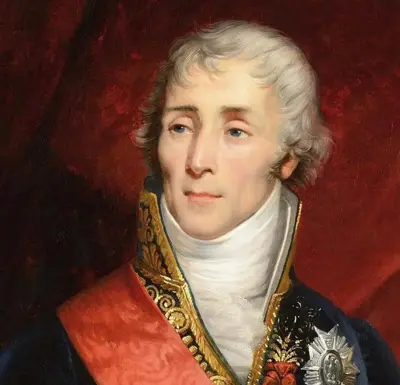
Joseph Fouché, 1st Duc d'Otrante, 1st Comte Fouché was a French statesman, revolutionary, and Minister of Police under First Consul Napoleon Bonaparte, who later became Emperor Napoleon. He was particularly known for the ferocity with which he suppressed the Lyon insurrection during the Revolution in 1793 and for being minister of police under the Directory, the Consulate, and the Empire. In English texts, his title is often translated as Duke of Otranto.
