Ludwig von Mises Quotes
Taxes are necessary. But the system of discriminatory taxation universally accepted under the misleading name of progressive taxation of income and inheritance is not a mode of taxation. It is rather a mode of disguised expropriation of the successful capitalists and entrepreneurs.
von Mises, Ludwig. Human Action: A Treatise on Economics. Yale University Press, 1949, p. 803.


Even on Medieval days in Europe, the wealthy barons paid lower tax rates that their lowest peasants. Relief from taxes was one of the privileges of the very rich. The practice has been made more cosmetic, but the result seems to have been the same into the 21st century.


The tax rates on income from working is much higher than on income generated from money which is invested. The reason for this is that the government wants economic growth and lowering the tax rate on investment profits will produce more investment which theoretically creates more jobs and strengthens the economy. However, most workers have no choice about whether they have to work. Lowering their tax rate will not induce them to work more. This not only produces a patently unfair burden on the worker compared to people who have capital to invest—usually among the wealthiest Americans. Another problem is that there are many forms of investment that does not produce any benefit for the United States. Many people invest in overseas banks, non American companies. These we tax at a low rate and all the benefits of the investment go to the foreign country.


This quotation is a wonderful example of the use of sarcasm. Schwartz does not really advocate the emigration of the super rich, but uses the hypothetical concept to illustrate that one solution to a socio-economic problem will work but have very undesirable consequences.

This is one of the first American Presidential statements citing the virtue of progressive taxation. What was an oppressive tax for one person might not be for another.


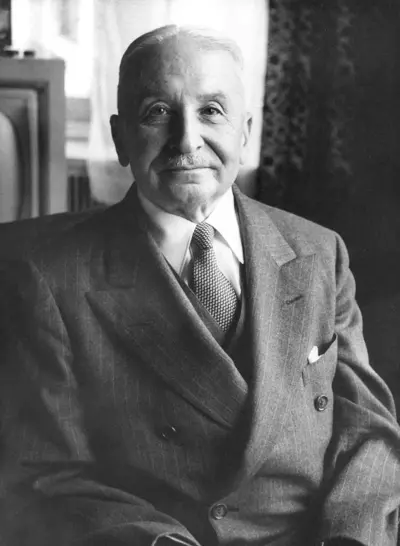
Ludwig Heinrich Edler von Mises was an Austrian School economist, historian, logician and sociologist. Mises wrote and lectured extensively on the societal contributions of classical liberalism. He is best known for his work on praxeology, a study of human choice and action.
