William Shakespeare Quotes
Tam: What begg’st thou then? fond woman, let me go. Lav: ’Tis present death I beg; and one thing more That womanhood denies my tongue to tell. O! keep me from their worse than killing lust, And tumble me into some loathsome pit, Where never man’s eye may behold my body: Do this, and be a charitable murderer. Tam: So should I rob my sweet sons of their fee: No, let them satisfy their lust on thee. Dem: Away! for thou hast stay’d us here too long. Lav: No grace! no womanhood! Ah, beastly creature, The blot and enemy to our general name. Confusion fall—
Shakespeare, William. Titus Andronicus. The Riverside Shakespeare, 2nd ed., edited by G. Blakemore Evans, Houghton Mifflin, 1997, act 2, sc. 3, ll. 172-84.


The human rights abuses in the Belgian Congo were horrible. Natives who refused to work for the low wages were murdered or had their hands chopped off. The indigenous population was markedly reduced. Word of the atrocities started leaking out to Europe. It is not known whether the King really wanted any reform or just sent the instructions to cover himself. The instructions were not followed; the atrocities continued, and Leopold never took any steps to discipline his agents and minions. The Belgian Congo had the worst atrocities in the world until WWII.


The French refer to it as the Jacquerie since Jacques was a derogatory name for a peasant since so many men had that as a first name.

The Sally was owned by Nicholas Brown and Company and this voyage was financially unsuccessful with 109 out of 196 slaves dying in board. Brown, of the family that founded Brown University, was discouraged by this voyage and withdrew from the slave trading business. See {641475}. American naval hero, John Paul Jones, served under Hopkins in the American Revolution.


Queen Boudicca of the Iceni tribe had revolted in Roman Britain. The Romans where particularly harsh in putting down revolts but under Emperor Nero and Caligula after him, they sunk to the deepest of barbarities,

Ignorant political opposition to new scientific findings has been characteristic of some of the politicians in most governments in most eras.


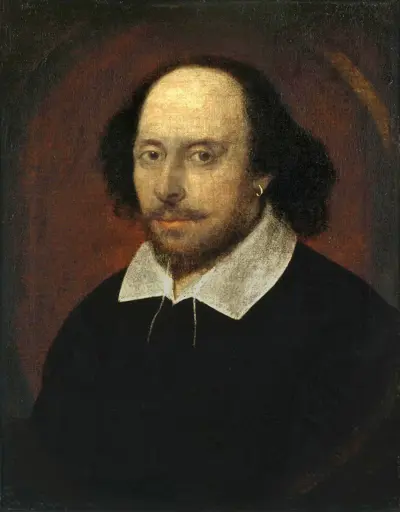
William Shakespeare was an English playwright, poet, and actor, widely regarded as the greatest writer in the English language and the world's greatest dramatist. He is often called England's national poet and the "Bard of Avon" (or simply "the Bard"). His extant works, including collaborations, consist of some 39 plays, 154 sonnets, three long narrative poems, and a few other verses, some of uncertain authorship. His plays have been translated into every major living language and are performed more often than those of any other playwright. They also continue to be studied and reinterpreted.
