Robert Blatchford Quotes
Socialists do not propose by a single Act of Parliament, nor by a sudden revolution, to put all men on an equality, and compel them to remain so. Socialism is not a wild dream of a happy land, where the apples will drop off the trees into our open mouths, the fish come out ot the rivers and fry themselves for dinner, and the looms turn out ready-made suits of velvet with gold buttons, without the trouble of coaling the engine. Neither is it a dream of a nation of stained-glass angels, who always love their neighbours better than themselves, and who never need to work unless they wish.
This book became the basic English textbook on socialism. Astoundingly, it sold over 2 million copies at a time when few books other than the Bible ever sold in that quantity. The fact that it was so popular alarmed many of the more conservative politicians of the day.
Robert Blatchford, 1851-1943, Journalist & Editor of The Clarion (A Socialist Newspaper), Merrie England, 1894
Sourced by: Eigen's Political and Historical Quotations


The editorial was in support of women’s suffrage—the right to vote which at the time women did not have in Britain. Women were very active in protests and demonstrations. Tactics sometimes involved civil disobedience and chaining themselves to public buildings. It was the civil disobedience and disruptions that the newspaper referred to as the “follies and excesses.” In retrospect today, it is amazing how threatened the society felt and how they reacted to the “threat” of females voting. It does however give us a perspective on those contemporary societies which restrict women’s voting rights.


The class warfare and control of society previously by the wealthy made this the first article of the new Spanish Constitution. This very concept was one of the factors that led to the Spanish Civil War as Spain was in many ways still a feudal society.


At the time, Capetown was under the control of the Dutch East India Company which had recruited Gordon from Scotland. There was a wave of liberality following the Enlightenment, the American Revolution, and the very vocal English, anti-slavery, reformers. The Dutch were concerned mainly with making money, and that they thought that meant stability and the status quo. Gordon was their strong spokesman on this. Like American Southern slave owners, Gordon read the Bible as God endorsing slavery and the inferiority of Blacks. Thus, reformers did not "believe in God any more".

The Diggers were a religious-economic movement that even today would be considered very radical. They advocated the right of the poor to go onto public lands and farm them—thus the name “Diggers.” Beyond their opposition to the private ownership of land to the exclusion of the poor, Winstanley and the Diggers promulgated another very modern doctrine: That the poor should take the responsibility and have the right to determinine how the society should provide for the poor. A version of this became one of the Mottos of the Poverty Program of 1964. See {616966}.


The socialist extremists wanted the state to own all the major businesses which would be operated without a profit allowing more money to be paid to the workers without any price increase for the consumer. Yet, many of them wanted the innovation and other virtues of the private sector and few were ready to take on the political chaos that would be involved in eliminating private ownership of businesses. Crosland forced them to logically accept the concept of profits as desirable for the society.


He was very conservative in almost all things, but here and with the equality of women (see {638806}) he was far ahead of his time.


The “rebate agony” referred to a corrupt practice of the Railroads and the Large Monopolies. The railroads charged a very high rate for the transportation of important products like beef and oil. However, secretly they gave back a large percentage of the transportation rate charged to the trusts. They in turn could cut their prices and undersell all the smaller competitors who were paying “full freight” and could not afford to match the lower price. As soon as the smaller competitors were driven out of business in an area, the trust raised its rates even higher than they charged originally. The Railroad had made a small but reasonable profit on the freight of the trusts but they were guaranteed all their business. They also made huge profits on the higher rates that the small companies paid until those companies were driven out of business. Journalists like Ray Baker and Ida Tarbell had uncovered the rebate scheme which enabled the trusts to steal high amounts from the general public through unreasonably high prices. President Theodore Roosevelt was committed to try and regulate the railroads and not allow rebates but charge the same public rate to all with no rebates. Socialists like Sinclair, thought that this attempt would be hopeless—that the damage had already been done, and the trusts now had so much money that they could buy state legislatures and many in Congress to preserve their dominance.

Many people had come to the conclusion that capitalism as it then existed was not sufficient to correct some of the serious inequities in society. They saw that socialism tended more to focus on those. However, they also saw in socialism per se, as it was than advocated, many other problems. Steffens seems to be the first person to describe that type of person, in this case, himself.

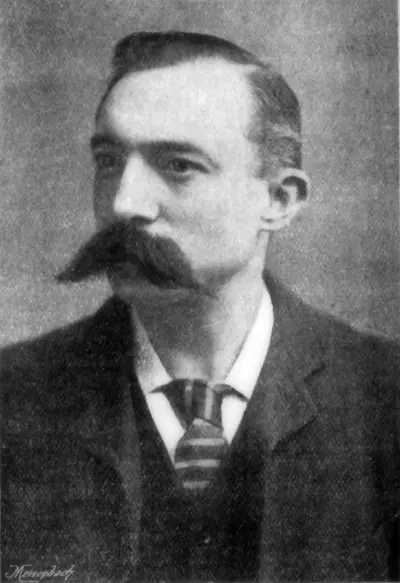
Robert Peel Glanville Blatchford was an English socialist campaigner, journalist, and author in the United Kingdom. He was also noted as a prominent atheist, nationalist and opponent of eugenics. In the early 1920s, after the death of his wife, he turned towards spiritualism.
