Stephen D. Miller Quotes
Slavery is not a national evil; on the contrary, it is a national benefit. Involuntary slavery has the advantage, since all who enjoy political liberty are then in fact free. Wealth gives no influence at the polls [in the South]; it does where white men perform the menial services which slaves do here.
Stephen D. Miller, 1787-1838, U. S. Senator (SC), Governor of South Carolina, Address to South Carolina legislature, 1829
Sourced by: Eigen's Political and Historical Quotations


The racial inequality did cause a Black revolution in the 1960s. The arrival and influence of Martin Luther King, at the time Black revolution might have turned violent, and the willingness of a substantial number of whites to implement the Civil Rights revolution functioned as a safety valve so that there was substantial reform towards much more racial equality.

Charleston was in the Southern part of the state where most people supported slavery. Douglas made an unequivocal pitch for the racist vote {600060} and forced Lincoln to take a stand. Like many politicians today, Lincoln decided to give the audience what they wanted to hear. It is not clear whether or not he ever believed this statement or was just pandering in a political campaign. He had never said this in the Northern part of the state of before. Lincoln’s views on race changed and matured over the years, culminating in the Emancipation Proclamation. Lincoln lost the Senate seat to Douglas.

As a young boy, Moyers lived and went to school in Texas where the state has control over all the schools’ curricula and slavery was taught about with little reality.


The letter was written in the supposed style of a Black after Emancipation and includes most of the ugly false stereotypes of the worst of the racists of the present and the slaveowners of past times. Williams stated that he was not a racist and was trying to make a point about freedom required risk and responsibility. However, the effort was interpreted by many people, Black and white, to be insulting and a put down of African Americans. At the same time, although most of the Tea Party members were not racists, most of the racists in America were supporters of the Tea Party. Those people interpreted the quotation as "telling it like it is" about Blacks who do not want the responsiblities and risks of freedom and are not yet developed sufficiently to be equal citizens in a democracy.
Most of us think the California was not a slave state, but in the early 1850s the California law (such as it was) allowed a slave owner to “sojourn” in California with his property that could include slaves. A number of Southern save owners took slaves to the California gold fields to do mining. There was a great deal of resentment on the part of the other miners and the free labor of the territory. In 1855, slavery in California was abolished.

Many historians of higher education to not agree with Wilder’s overall generality. However, it was certainly the case that slavery was a major factor in generating the funds for some early universities in the North, but others were “hotbeds” of abolition from their very inception.

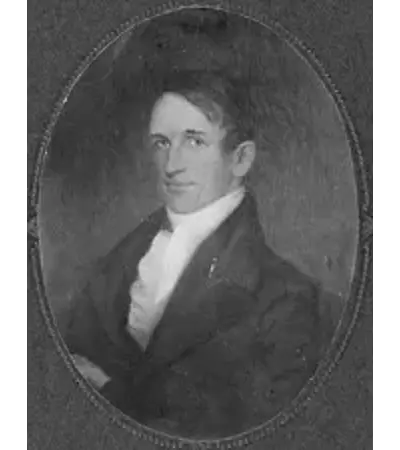
Stephen Decatur Miller was an American politician, who served as the 52nd Governor of South Carolina from 1828 to 1830. He represented South Carolina as a U.S. Representative from 1817 to 1819, and as a U.S. Senator from 1831 to 1833.
