Thomas Ruffin Quotes
Concubinage, which is voluntary on the part of the slaves, and permissive on that of the master…in reality, is the relation, to which these people have ever been practically restricted, and with which alone, perhaps, their condition is compatible.
Thomas Ruffin, 1787-1870, Chief Justice, North Carolina Supreme Court, Alvany v. Powell, 1854
Sourced by: Eigen's Political and Historical Quotations


Referring to Black Congressman Julian Bond: Louis Eugene Walcott


The Republican Party condemned polygamy and slavery in its party platform of 1856
Sexual abuse of female slaves was very common in the American South. See {642027} and {642028}. In the 1930s over 2,300 formerly enslaved African Americans were interviewed by members of the Federal Writers' Project, a New Deal agency in the Works Progress Administration (WPA) during the Great Depression. This particular abuse was one of the most common reported. Ironically, the Southern justification for segregation and prohibition of inter-marriage even through the 1950s, was to prevent the great “crime” of miscegenation which white slave owners and their male friends committed by raping and sexually exploiting the female slaves. Today, as DNA analysis shows, most traditional Southern “white” families have recent Negroes in their ancestry.


This was the first public outing of Thomas Jefferson’s sexual relationship with his slave Sally Hemmings.


Miller was the first Black American admitted to a Graduate Program—Johns Hopkins—in Mathematics

As a result of the programs and philosophy he expounded, Leontiev joyously predicted:

After his Presidency, Adams served in the House of Representatives for many years and was thus active in politics.
Toward the end of the 19th century Cambodia became a protectorate of France. One of the first things that the French did was abolish slavery. There was a general rebellion as few in Khmer society wanted change of any kind.


Referring to the Arawak natives he found when he landed in the "new world—San Salvador:"

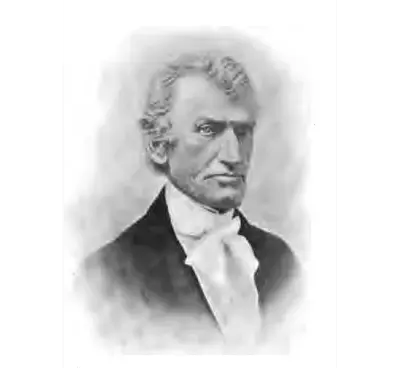
Thomas Ruffin (1787–1870) was an American jurist and Justice of the North Carolina Supreme Court from 1829 to 1852 and again from 1858 to 1859. He was Chief Justice of that Court from 1833 to 1852.
