Harry S. Truman Quotes
Richard Nixon is a no good, lying bastard. He can lie out of both sides of his mouth at the same time, and if he ever caught himself telling the truth, he'd lie just to keep his hand in.
Miller, Merle. Plain Speaking: An Oral Biography of Harry S. Truman. Berkley Publishing Corporation, 1974.


Coughlin was one of America’s most virulent hate-mongers. He was pro-Nazi, racist, anti-Semitic and an extremist of the political right wing. He had a weekly radio show which was notorious for its untruths. The Catholic Church was finally so embarrassed that he was ordered to give up his public haranguing.


Comment to President Teddy Roosevelt as while he, as US Secretary of State, dealt extensively with a deceitful Russia as they attempted to expand into Chinese Manchuria which eventually led to the Russo-Japanese war of 1904-1905.


Describing Martin Luther King Jr.:


The then CIA Director, Allen Dulles, fostered a practice of “adjusting” intelligence reports to support ideological policies and theories that were then in vogue. The agents in the field knew what was wanted and many adjusted their reports to coincide with the overall intelligence and policy. The station chiefs and other supervisors often ignored reports of their agents that they knew were not exactly accurate. Copeland however, just fabricated reports and “information” from sources. The honesty and integrity of the CIA intelligence operations have varied from time to time and depended much on the CIA Director at the time. Allen Dulles, though brilliant and able, fostered an ideological intelligence agency. He even went so far as to lie to the President on several occasions.

Kerry had just finished a formal presentation, and thought that the microphones he was wearing had all been removed. Some opponents accuse him of knowing that he was overheard by live mikes.

Referring to Richard M. Nixon:


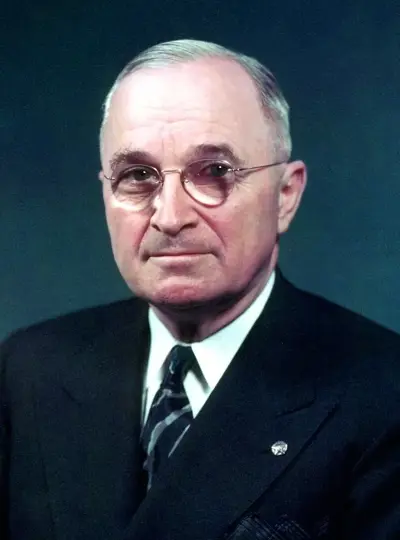
Harry S. Truman was an American politician who served as the 33rd President of the United States (1945–53). He served as a United States Senator from Missouri (1935–45) and briefly as Vice President (1945) before he succeeded to the presidency on April 12, 1945 upon the death of Franklin D. Roosevelt. He was president during the final months of World War II, and approved the plan to drop atomic bombs on Hiroshima and Nagasaki. Truman was elected in his own right in 1948. He presided over an uncertain domestic scene as America sought its path after the war and tensions with the Soviet Union increased, marking the start of the Cold War.
